

Spare Parts
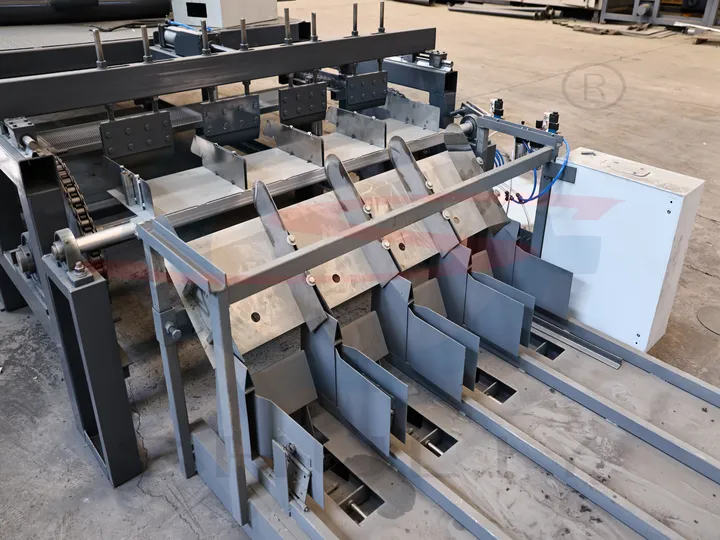
Automatic Egg Tray Loading Machine
Automatic egg tray loading machine, 15,000–32,000 eggs/h. Automated orientation, tray feeding and packing system reduces labor and improves efficiency.

Spare Parts
Egg tray mesh belt drying machine, 1500–7000 pcs/h. Multi-layer continuous drying (1–6 layers), 180–200°C, reduces moisture to 10–12%, high efficiency system.
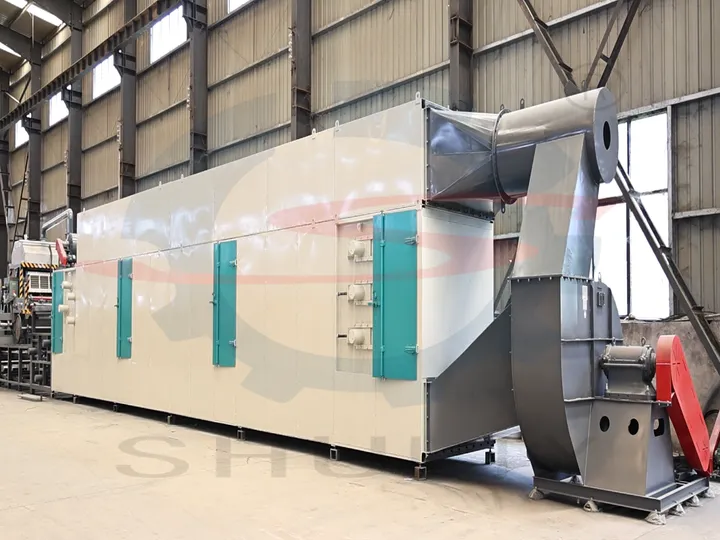
An egg tray mesh belt drying machine is a continuous industrial drying system specifically designed for pulp molding production lines. Unlike batch-type drying rooms, this equipment utilizes a multi-layer conveyor belt structure to transport wet egg trays through a series of heated drying zones, enabling uninterrupted processing from input to output.
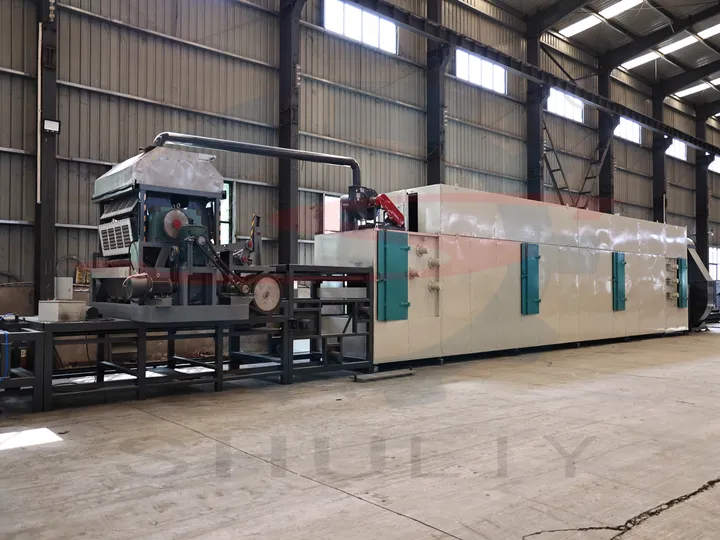
The machine features a modular drying chamber configuration with 1 to 6 layers and 4 to 8 drying sections, achieving production capacities ranging from 1,500 to 7,000 pieces per hour. With operating temperatures between 180°C and 200°C, it reduces the moisture content of freshly molded egg trays from approximately 60–70% down to 10–12% within a single continuous pass, making it ideal for medium to large-scale pulp molding facilities.
| Model | Capacity | Dimensions | Drying Temp | Main Fan Power | Burner Capacity | Drying Sections | Structure |
|---|---|---|---|---|---|---|---|
| SL-1-4 | 1,500 pcs/h | 21.5×2.2×2.4 m | 180–200°C | 4–22 kW | 900,000 kcal | 2 × 5.8 m | 1–4 layer |
| SL-3-4 | 2,500 pcs/h | 22.5×1.9×3.4 m | 180–200°C | 4–30 kW | 1,300,000 kcal | 2 × 5.8 m | 3–4 layer |
| SL-4-4 | 3,000 pcs/h | 22.5×2.2×3.4 m | 180–200°C | 4–30 kW | 1,300,000 kcal | 2 × 5.8 m | 4–4 layer |
| SL-4-8 | 4,500 pcs/h | 28.5×2.2×3.4 m | 180–200°C | 4–30 kW | 1,500,000 kcal | 3 × 5.8 m | 4–8 layer |
| SL-5-8 | 5,000 pcs/h | 28.5×2.2×3.4 m | 180–200°C | 4–37 kW | 1,500,000 kcal | 3 × 5.9 m | 5–8 layer |
| SL-6-8 | 7,000 pcs/h | 34.5×2.5×3.6 m | 180–200°C | 4–45 kW | 1,900,000 kcal | 11 sections | 6–8 layer |
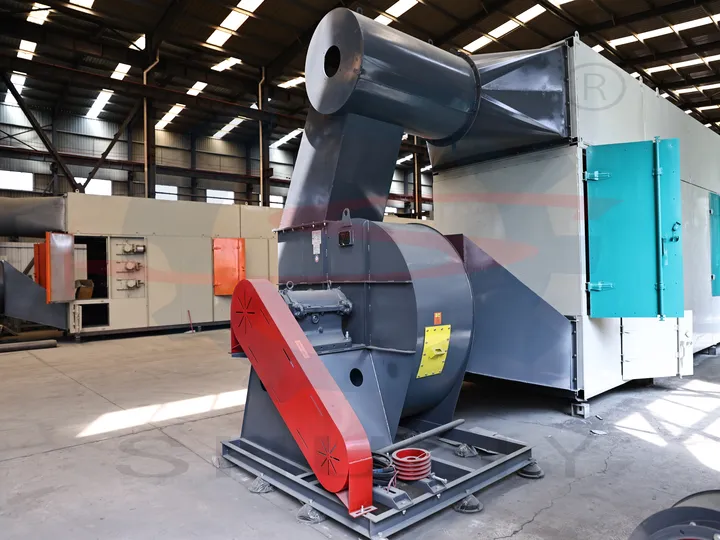
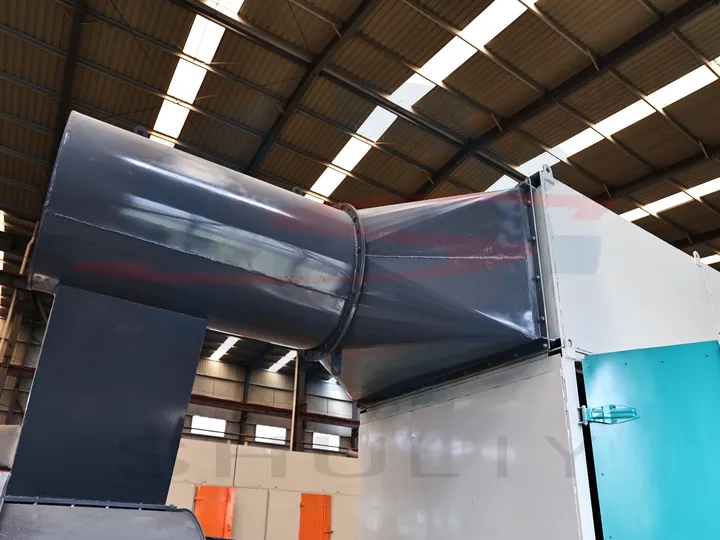
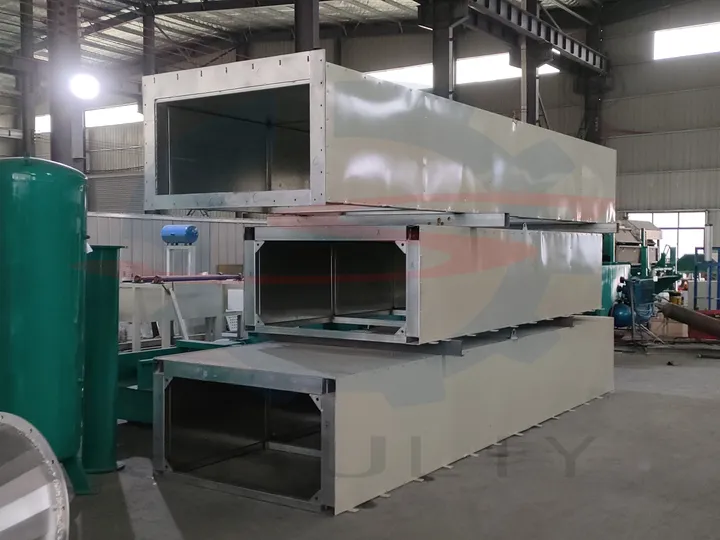
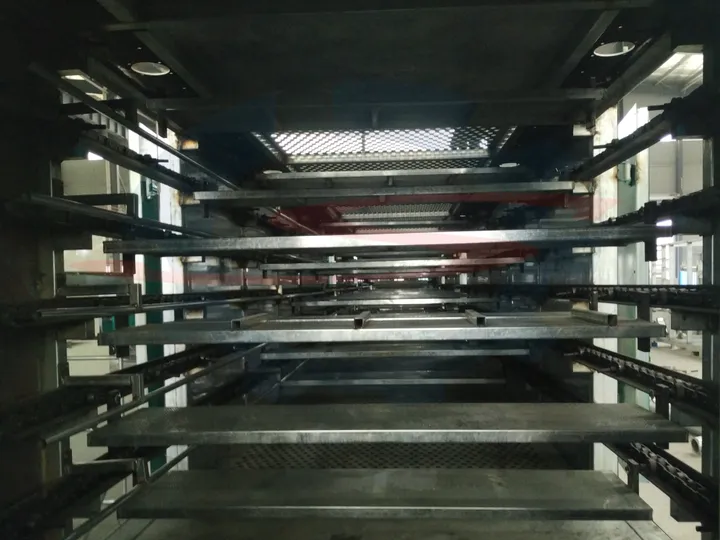
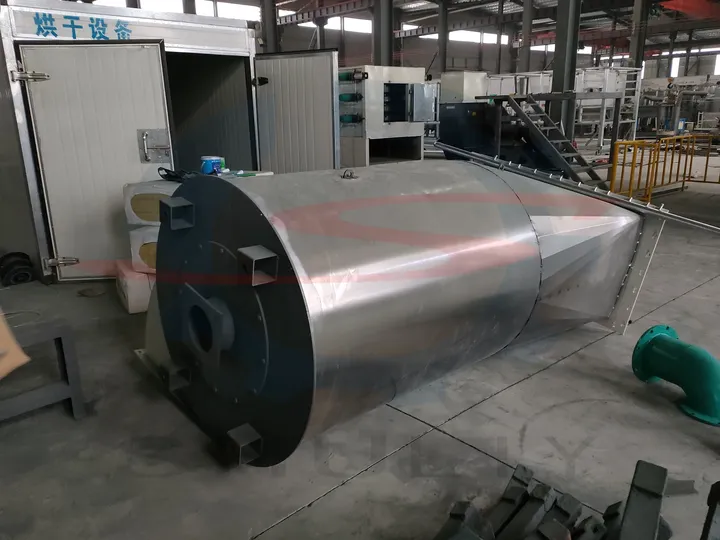
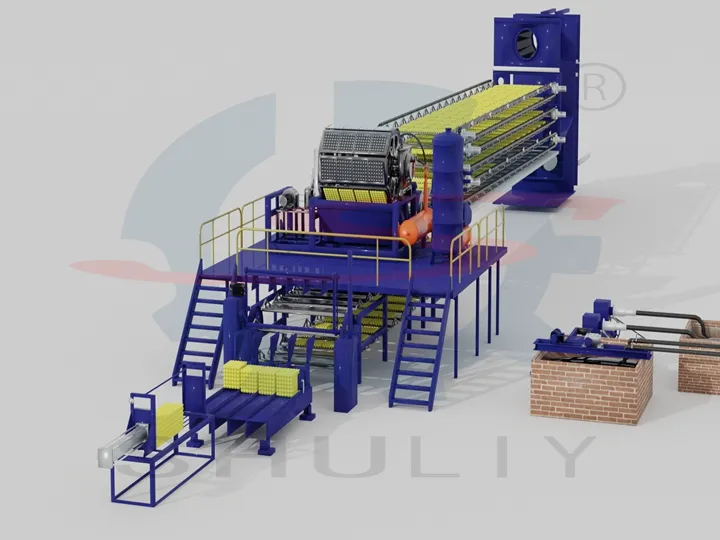
Unlike batch dryers that require loading and unloading cycles, the mesh belt egg tray dryer operates continuously. Wet trays are automatically fed onto the conveyor belt at the inlet and exit as fully dried products at the outlet.
This non-stop operation eliminates downtime between batches, increasing overall production efficiency by 40–60% compared to traditional batch drying methods.
The machine’s vertical multi-layer configuration (ranging from 1 to 6 layers) maximizes drying surface area within a compact footprint.
Each layer operates as an independent drying zone, allowing simultaneous processing of multiple tray streams. The 4-8 layer models (SL-4-8 through SL-6-8) are particularly suited for facilities with limited floor space but high output requirements.
Operating at temperatures between 180°C and 200°C, the continuous belt dryer for egg trays features segmented heating zones that can be individually regulated.
This zoned temperature management prevents overheating or under-drying, ensuring consistent product quality throughout the entire belt length.
Air distribution boards (ranging from 20 to 40 pieces depending on model) further optimize heat circulation within each drying section.
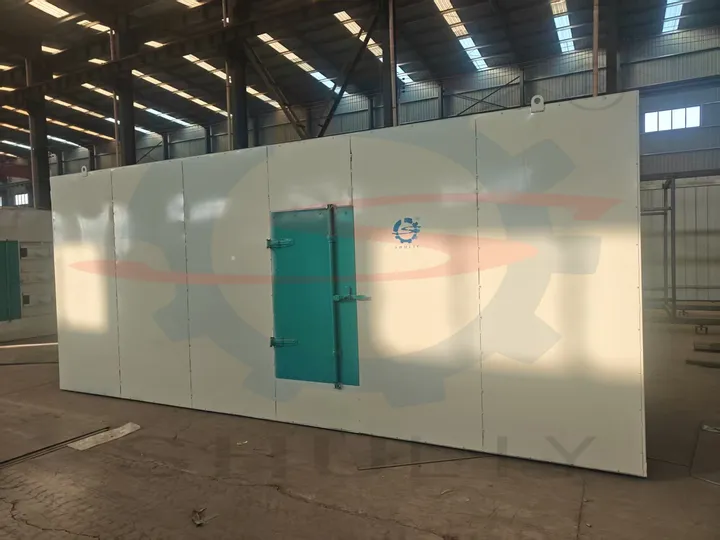
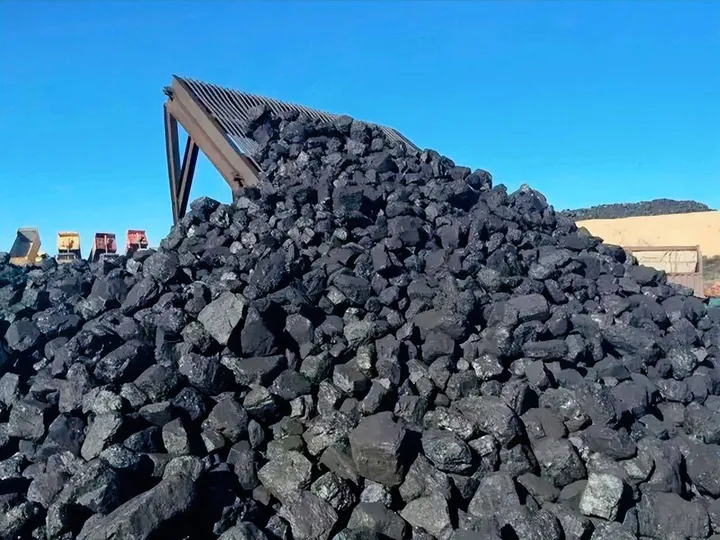
The drying machine supports multiple heating fuels, including:
This flexibility allows operators to select the most economical energy source based on local availability and cost considerations.
Larger models (SL-5-8 and SL-6-8) are equipped with high-capacity burners rated at 1,500,000 to 1,900,000 kcal, ensuring sufficient heat output for continuous high-volume production.


The conveyor mechanism utilizes industrial-grade chains (24A or 40A specification) with lengths ranging from 80 to 120 meters per chain.
These heavy-duty chains are engineered for continuous operation under high-temperature conditions, providing reliable power transmission and extended service life with minimal maintenance requirements.
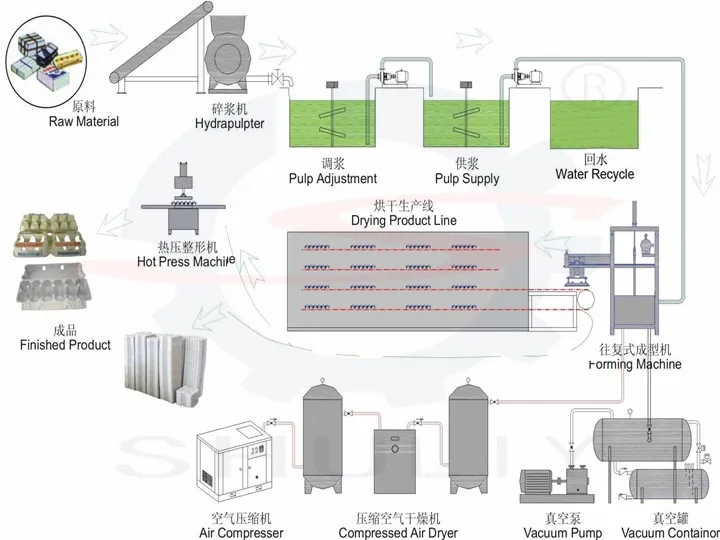
Freshly molded wet egg trays, typically containing 60–70% moisture, are transferred from the pulp molding machine onto the mesh belt conveyor.
The tray loading system ensures even spacing and proper alignment for optimal heat exposure.
As the mesh belt carries the trays through the drying chamber, they pass through multiple heated zones.
Hot air, generated by the burner system and distributed by high-power main fans (4–45 kW depending on model), flows uniformly through the mesh belt structure, contacting both the top and bottom surfaces of each tray.
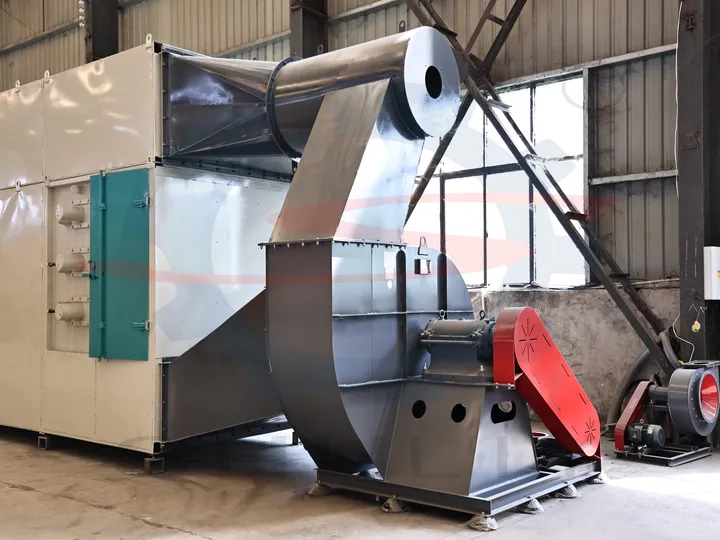
Dedicated exhaust fans (1.5–3 kW) continuously remove moisture-laden air from the drying chamber, preventing condensation and maintaining optimal drying conditions.
The exhaust system works in tandem with the heating zones to create a controlled drying environment.
Air distribution boards positioned throughout the drying chamber ensure even heat dispersion across the entire belt width.
This eliminates temperature variations that could cause uneven drying, warping, or surface defects.
After passing through all drying zones, the fully dried egg trays exit the machine with a moisture content reduced to 10–12%.
They are then ready for stacking, packaging, or direct shipment.
| Common Problem | Shuliy Solution |
|---|---|
| Batch drying causes production bottlenecks | Continuous mesh belt operation eliminates loading /unloading cycles, enabling uninterrupted workflow |
| Uneven drying leads to warped or brittle trays | Multi-zone temperature control and air distribution boards ensure uniform heat exposure across all tray surfaces |
| High energy consumption increases operating costs | Segmented drying zones allow precise energy allocation; fuel flexibility enables selection of most cost-effective energy source |
| Equipment requires excessive floor space | Multi-layer vertical design (up to 6 layers) maximizes drying capacity within a compact footprint |
| Frequent belt failures disrupt production | Heavy-duty 24A/40A chains with 80–120m length provide reliable continuous operation under high-temperature conditions |
| Manual operation increases labor costs | Automated conveyor system reduces manual handling; single operator can manage entire drying line |
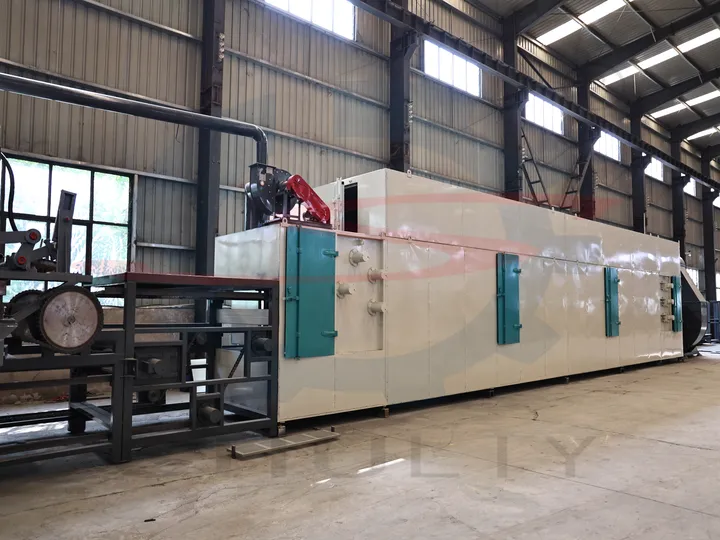
The SL-1-4, SL-3-4, or SL-4-4 models offer an ideal entry point for facilities producing 1,500 to 3,000 egg trays per hour.
These models feature:
The compact dimensions (approximately 21.5–22.5m in length) suit facilities with moderate space availability.
Main fan power ranges from 4–22 kW to 4–30 kW, keeping energy costs manageable for smaller operations.
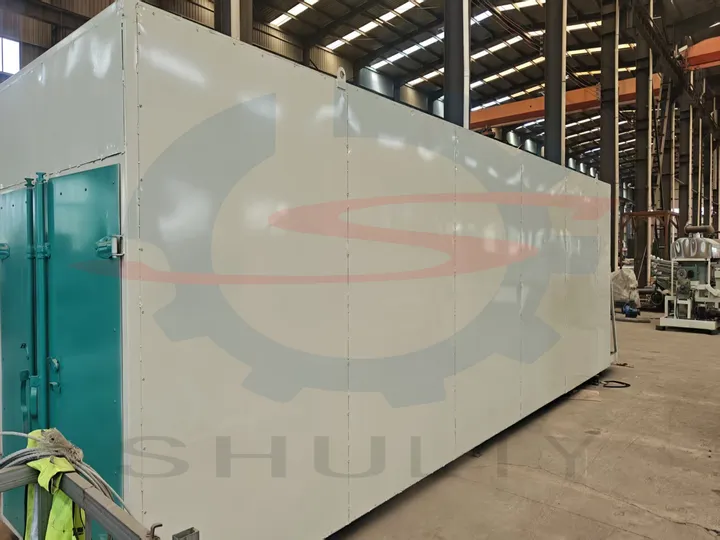
The SL-4-8 and SL-5-8 models deliver 4,500 to 5,000 pieces per hour with:
These machines feature upgraded main fan power (4–30 kW to 4–37 kW) and burner capacity (1,500,000 kcal).
The extended chain length of 120 meters per chain ensures smooth continuous operation for longer production runs.
The SL-6-8 model represents the highest capacity option, producing up to 7,000 egg trays per hour.
Its 6-layer, 8-section configuration with 11 individual drying chambers (each 2.2m×2.5m) provides maximum drying efficiency.
Additional features include:
This model is engineered for facilities targeting daily outputs exceeding 50,000 trays.
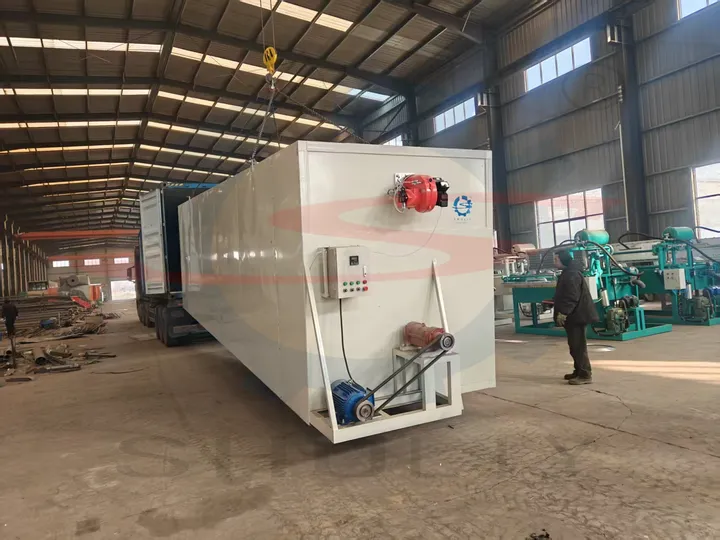
Shuliy’s egg tray mesh belt drying machine is purpose-built for paper pulp products, not adapted from generic industrial dryers.
Every component, from the mesh belt spacing to the air distribution board configuration, is optimized specifically for egg tray geometry and moisture characteristics.
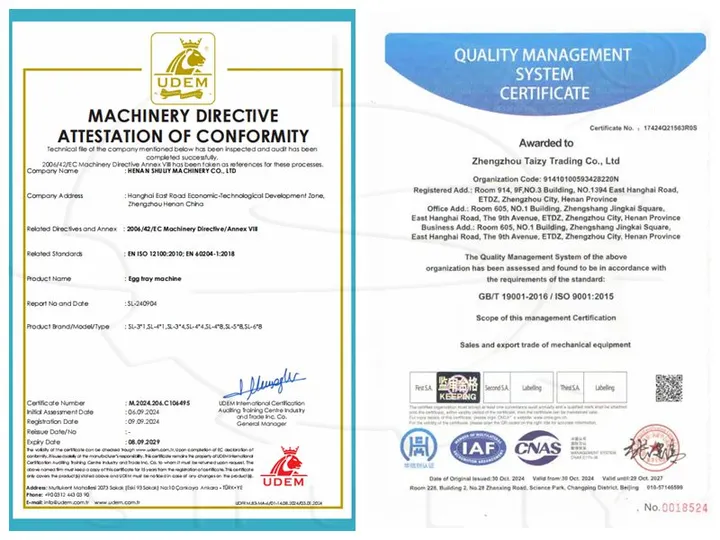
Every continuous belt drying system can be configured to match specific production requirements:
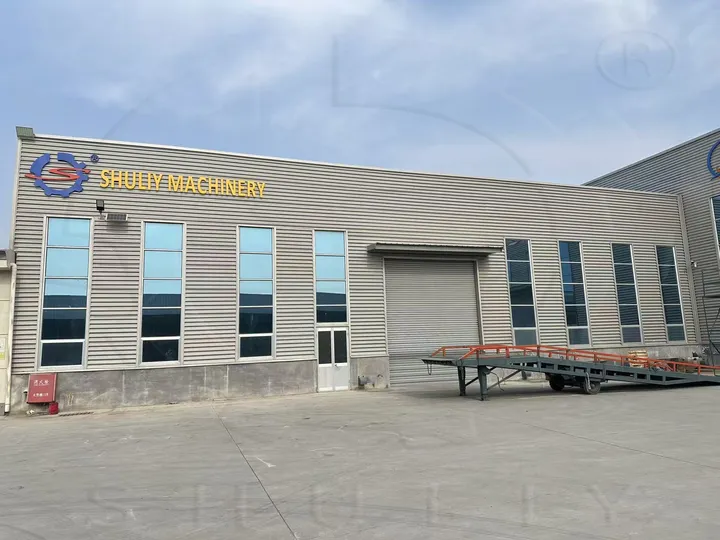
Drying time depends on the machine model and conveyor speed. In most cases, egg trays remain inside the dryer for 15–30 minutes, reducing moisture content to 10–12%.
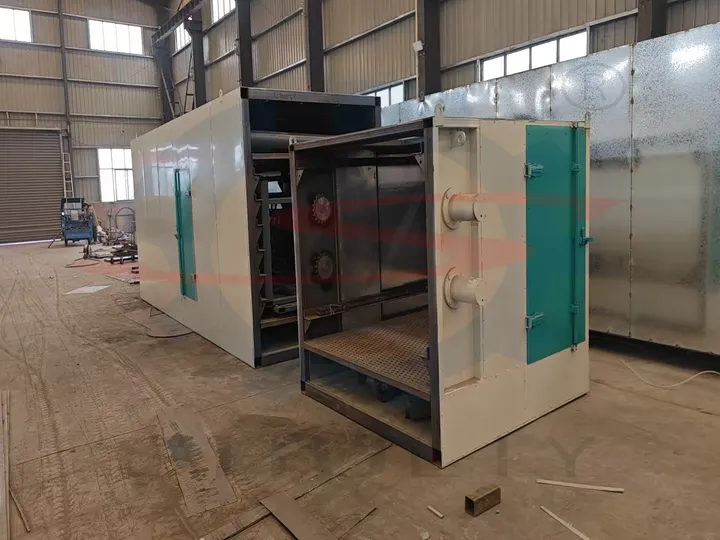
The listed models use an open-type structure, which allows easier maintenance, convenient inspection, and simpler integration with other production equipment
Coal and wood usually provide lower operating costs, while natural gas and diesel offer cleaner combustion and more precise temperature control. Fuel selection depends on local energy prices.
Yes. The machine can also dry egg cartons, fruit trays, cup carriers, shoe inserts, and other molded pulp products by adjusting temperature and conveyor speed.
Routine maintenance includes chain lubrication, fan inspection, burner cleaning, and mesh belt tension adjustment. A full inspection is recommended every 500 operating hours.
Yes. The mesh belt drying system can be connected with most pulp molding machines through conveyor speed matching and inlet/outlet adjustment.
Upgrading to an egg tray mesh belt drying machine transforms production from batch-based limitations to continuous efficiency.
With capacities ranging from 1,500 to 7,000 pieces per hour, multiple fuel options, and proven multi-layer drying technology, Shuliy provides a drying solution that scales with business growth.
Contact our engineering team for a customized quotation based on:
We can help design a complete pulp molding production line that delivers consistent quality, reduced energy costs, and long-term production efficiency.
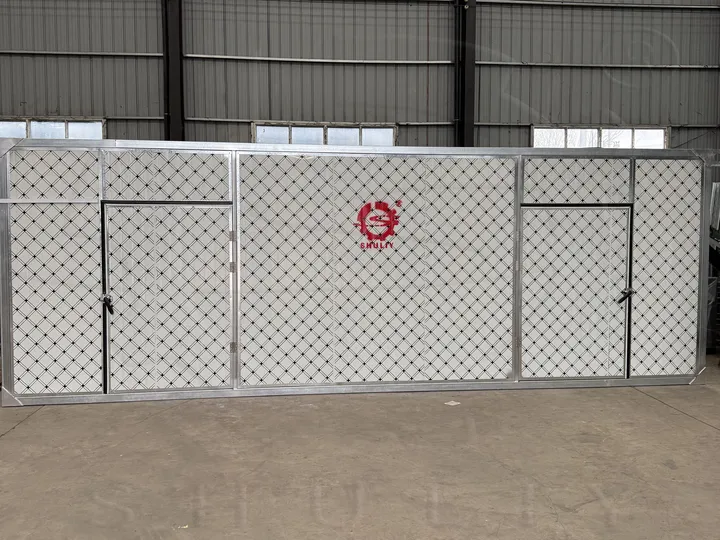
The SL series box-type egg tray drying machine is a specialized sealed drying room for pulp molding lines, designed to remove moisture from freshly molded egg trays. It adopts forced hot air circulation for uniform dehydration, with a batch capacity of 300–8,000 kg (6,000–160,000 pcs), matching small to large-scale production needs.
Spare Parts
Automatic egg tray loading machine, 15,000–32,000 eggs/h. Automated orientation, tray feeding and packing system reduces labor and improves efficiency.
Spare Parts
Egg tray drying machine 300–8,000 kg/batch capacity. High efficiency, reduced energy cost. Processes up to 160,000 trays/cycle with uniform moisture removal and strong tray quality.
Spare Parts
Hot press forming machine with PLC control, 15-ton pressure, 160–200°C temperature, and 6–10s cycle time for smooth, high-quality pulp molded trays.
Spare Parts
The egg tray packing equipment compresses 70–120 trays together, reducing volume and making loading and transportation easier.
Spare Parts
Egg tray drying equipment includes two main types: the egg tray drying room and the egg tray metal mesh belt continuous dryer. Both machines are used for drying egg trays, but they differ in drying method, automation …
Spare Parts
Pulping equipment including the hydra pulper, pulp pump, and other parts. The pulping equipment is mainly used to process the waste into paper pulp.
Spare Parts
Egg tray mold is customized according to the customer’s requirements. People use this machine to make different shape egg tray for different use.


