By Capacity
4000-7000pcs/hr Egg Carton Machine
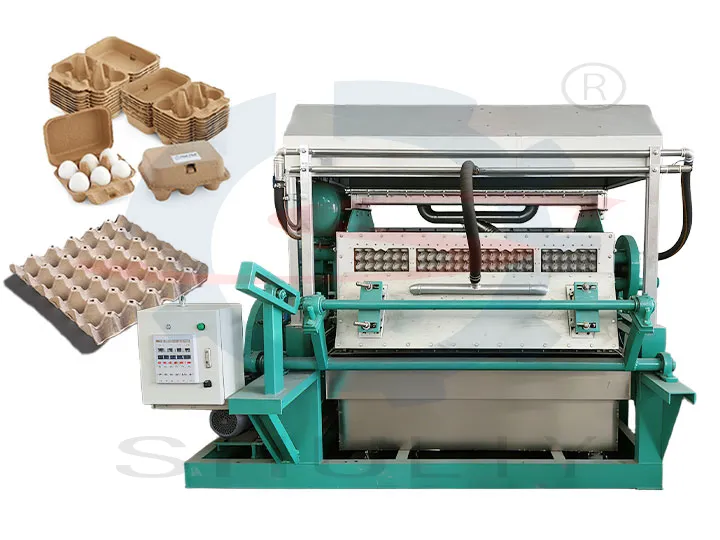
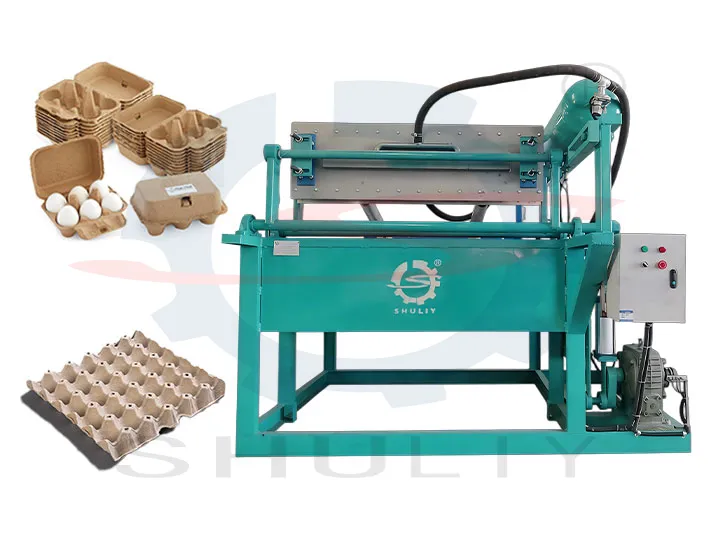
Shuliy offers large egg carton machines in three models: SL-4*8, SL-5*8, and SL-6*8. Their capacity ranges from 4,000 to 7,000 pcs/hr.

By Capacity
The 8 side egg tray machine, also known as a large-scale egg tray forming machine, is equipped with an 8-sided rotary drum
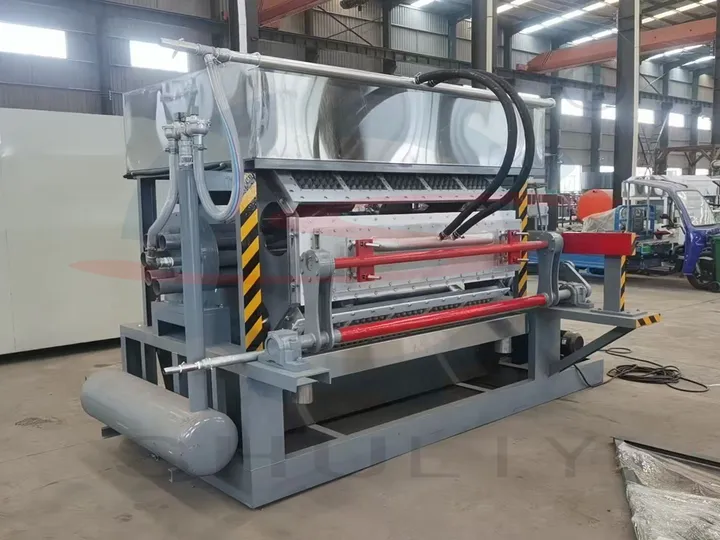
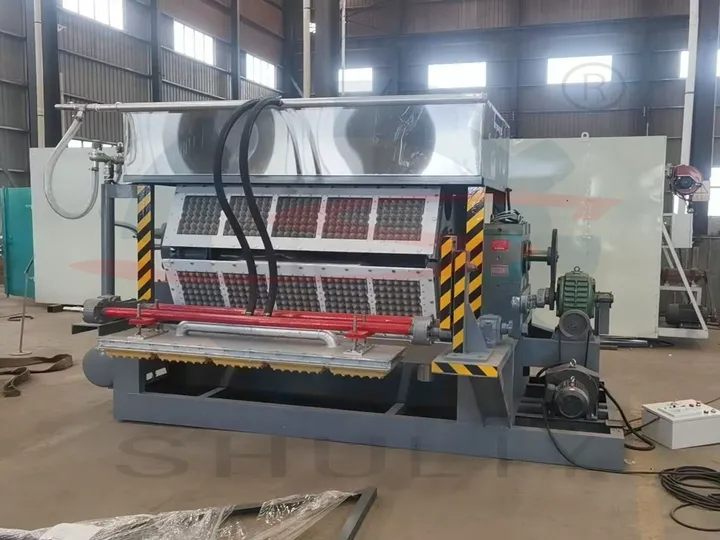
The 8 side egg tray machine, also known as a large-scale egg tray forming machine, is equipped with an 8-sided rotary drum. It enables high-speed, continuous production, making it especially suitable for factories with medium to large-scale output requirements.
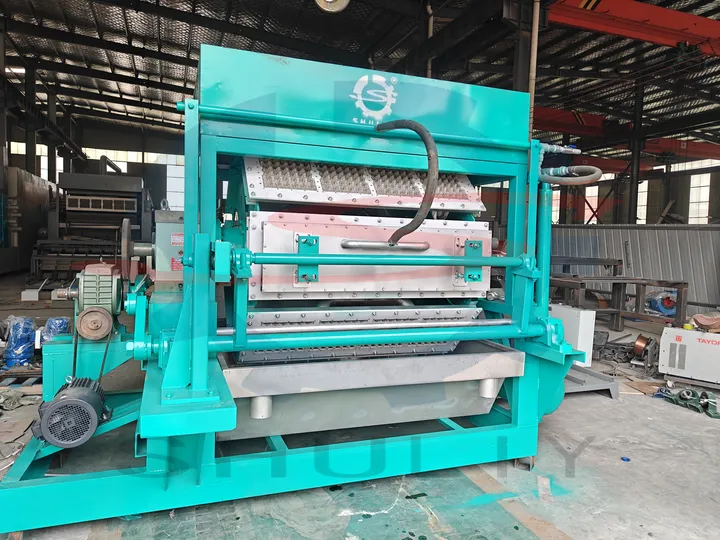
SL-4000-4X8 can produce about 4000pcs egg shells per hour. Egg plate molds can be customized according to the buyer’s requirements. This equipment can be continuously produced and ensures production capacity. In addition, because the whole production process is recycled waste paper, no pollution sources, so it is called green environmental protection machinery.
Model SL-5000-5X8 egg tray machine can produce about 5000pcs egg trays per hour. It is 45 angle and an eight-plate rotary tray machine. Eight plates form a board, and all systems can be connected. This transfer arm makes a 90-degree reciprocating motion. The working efficiency is very high.
The SL-7000-6X8 is our company’s highest-capacity egg tray forming machine, with an output of up to 7,000 pieces per hour. It features an 8-sided rotary drum with 6 egg tray molds on each side, making it ideal for efficient, large-scale production in big factories.
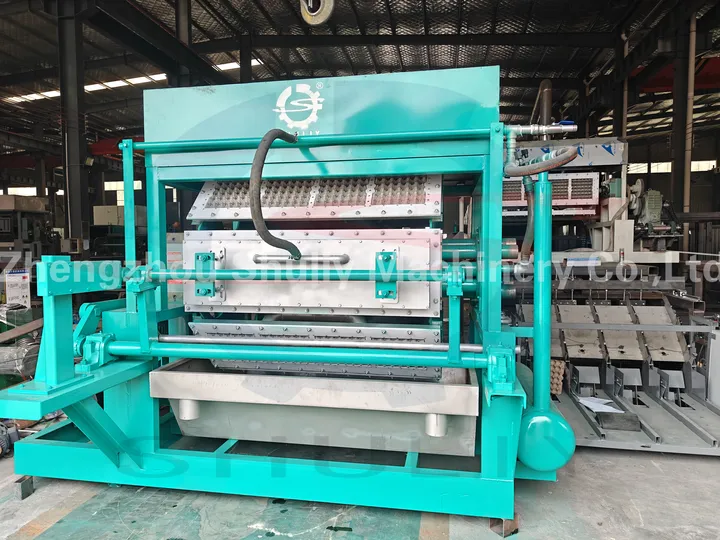
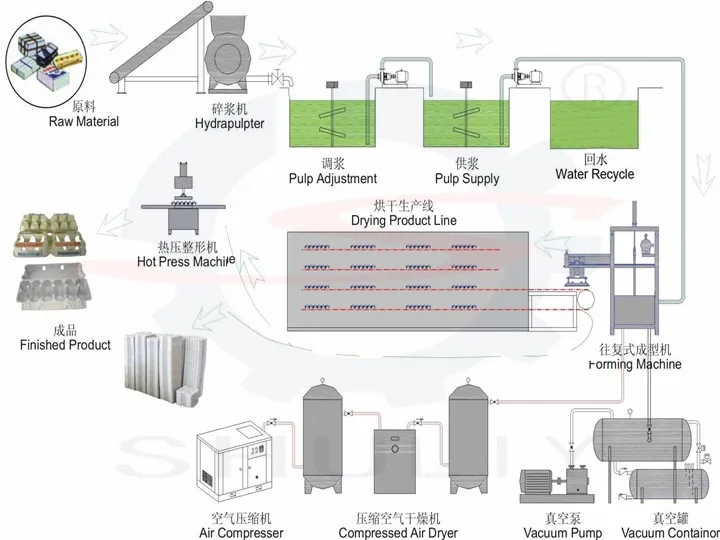
The 8-sided tray making machine mainly consists of the pulping system, forming system, drying system, and packing system.
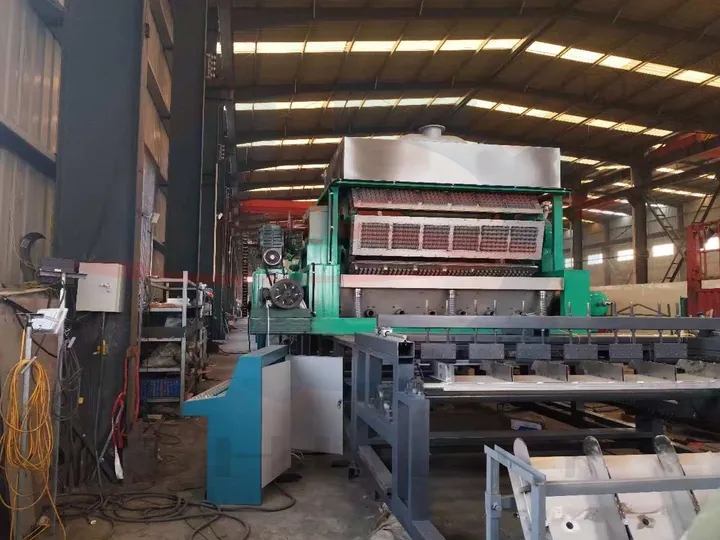
An 8 side egg tray machine uses an octagonal rotary drum as its forming core. Each of the eight drum faces carries a row of aluminum forming molds, and the whole drum rotates continuously through the pulp vat, vacuum forming station, and ejection zone.
The mold layout depends on the model:
This high-density layout is what allows the machine to reach 4,000–7,000 pieces per hour. The drum is driven by a heavy-duty gear system with wear-resistant bearings. A vacuum pump, air compressor, PLC control cabinet, and transfer conveyor are integrated into the same frame.
The complete production system also includes:
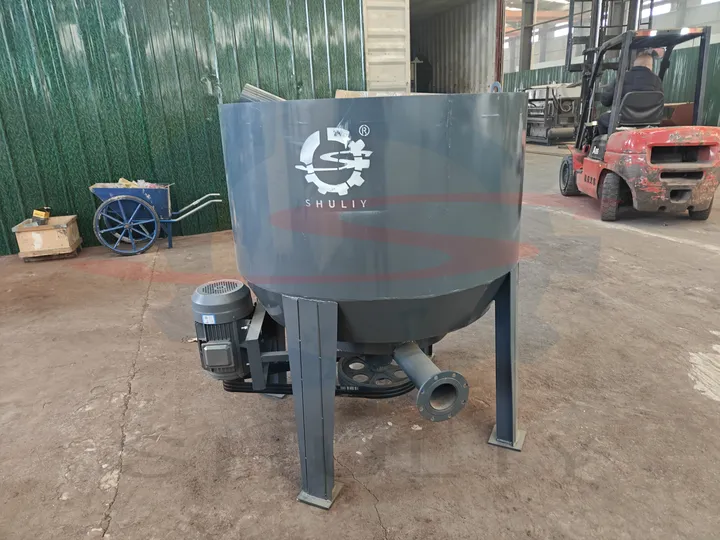
Waste paper, cardboard, or pulp board is loaded into the hydrapulper with water at a ratio of about 1:4. The blades run for 15–20 minutes until the mixture becomes a smooth fiber slurry. The pulp concentration is adjusted to 2–3% before it is pumped into the machine’s pulp tank.
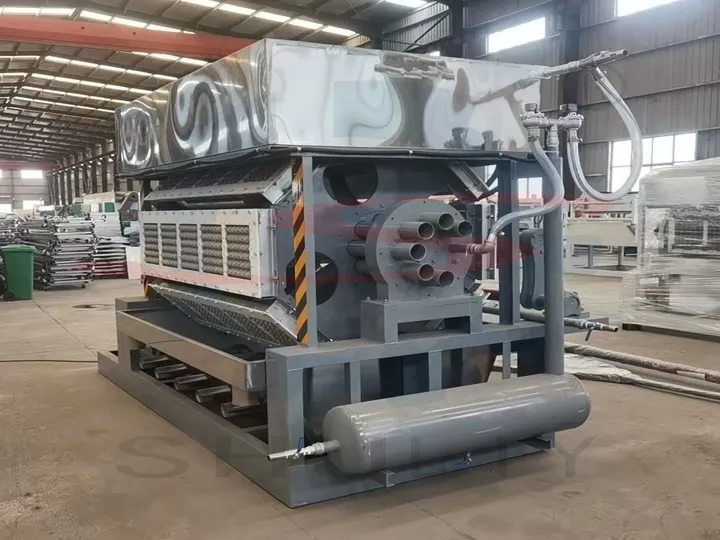
As the 8-sided drum rotates, each mold face dips into the pulp tank one after another. A vacuum pump draws pulp fibers onto the mold screen, shaping the wet tray inside the mold cavity. Because eight sides are working in sequence, forming never stops.
After leaving the pulp tank, the formed tray stays on the rotating drum for a few seconds. Gravity and vacuum suction remove excess water. The wet tray still contains about 50–60% moisture when it reaches the ejection point.
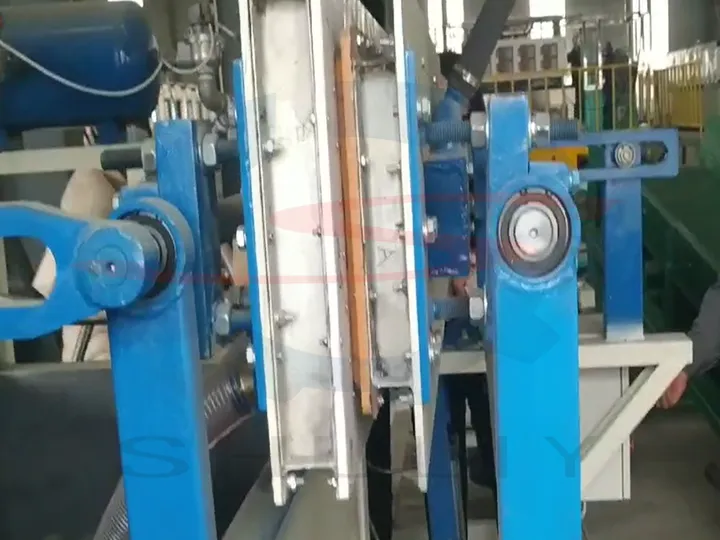
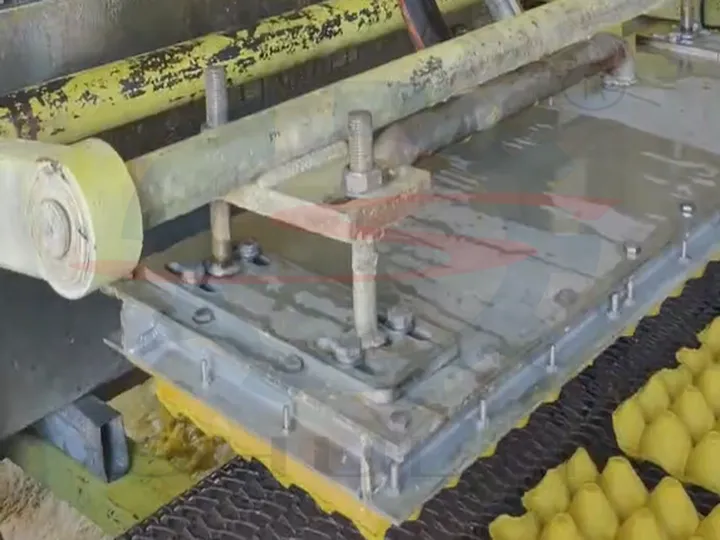
At the transfer position, the vacuum is released and positive air pressure blows the wet tray off the forming mold onto a transfer conveyor or a transfer mold. The empty mold then continues to the next forming cycle.
Wet trays move into the drying system. Depending on the setup, this can be:
Moisture is reduced from 50–60% to below 12%.
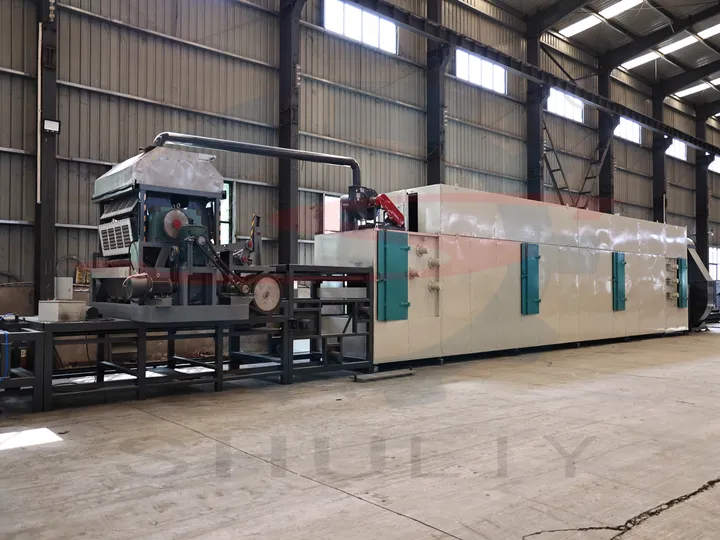
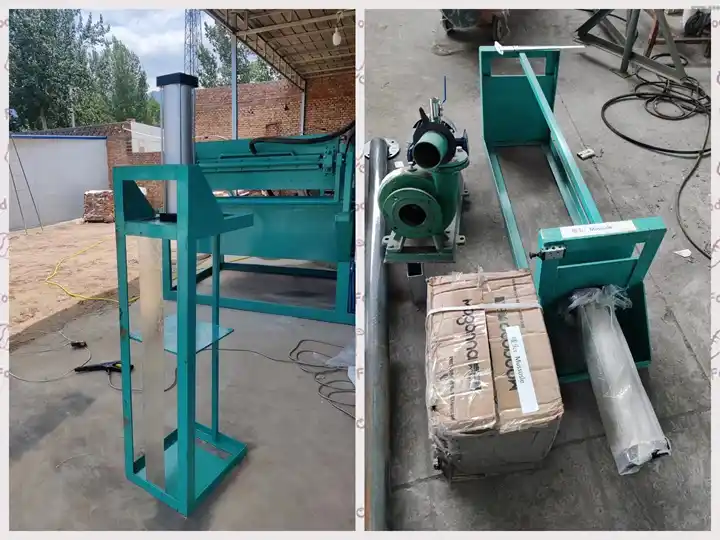
Dried trays are stacked and fed into a hydraulic packing machine. The press compresses the stack by 30–40% and straps it for transport. This reduces shipping volume and warehouse space.


| Model | SL-4000-4X8 | SL-5000-5X8 | SL-7000-6X8 |
| Capacity | 4000pcs/h | 5000pcs/h | 7000pcs/h |
| Power | 95kw | 95kw | 120kw |
| Voltage | 380V,50HZ | 380V,50HZ | 380V,50HZ |
| Weight | 7000kg | 8000kg | 10000kg |
| Pulp Usage | 320kg/h | 400kg/h | 480kg/h |
| Water Usage | 640kg/h | 800kg/h | 960kg/h |
| Size(mm) | 3250*2300*2500 | 3700*2300*2500 | 3200*2300*2500 |
| Item | Area |
| Machine footprint | 30–50 m² |
| Drying yard area | 1000 m² |
| Model | Length (m) | Width (m) | Height (m) |
| SL-4×8 | >65 | >15 | >3 |
| SL-5×8 | >65 | >15 | >3 |
| SL-6×8 | = 80 | >15 | >3 |
| SL-8×8 | = 80 | >15 | >3 |
| Model | Length (m) | Width (m) | Height (m) |
| SL-4×8 | 27.5 | 6 | 3.6 |
| SL-5×8 | 27.5 | 6 | 3.6 |
| SL-6×8 | 33.5 | 6 | 3.6 |
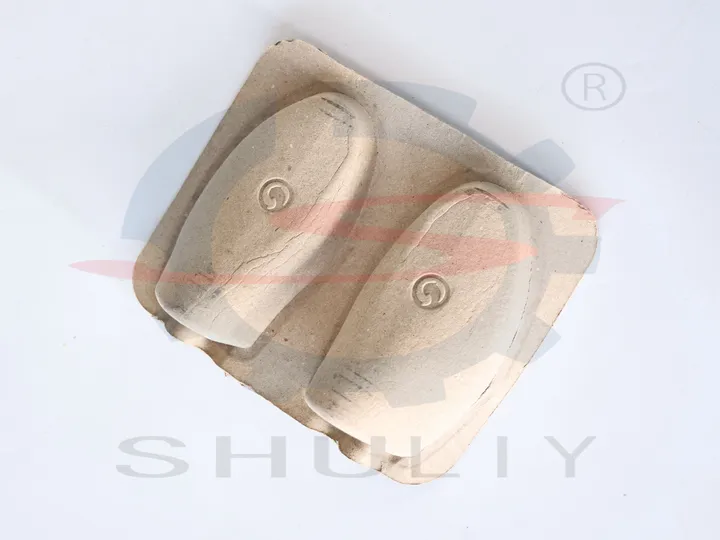
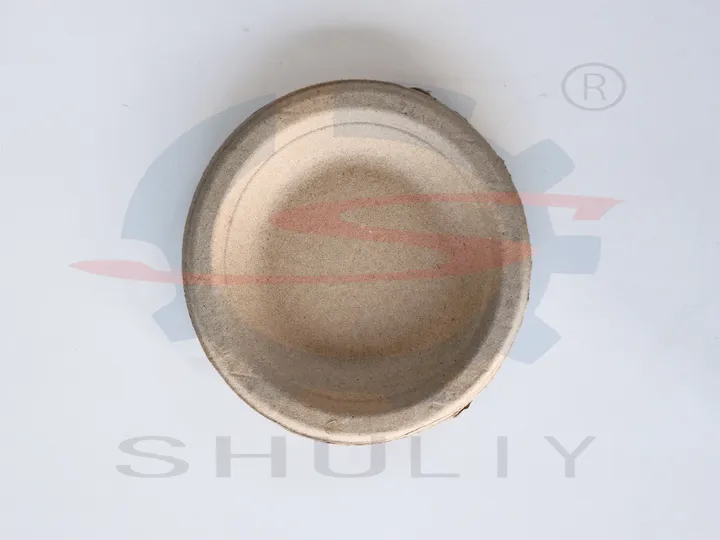
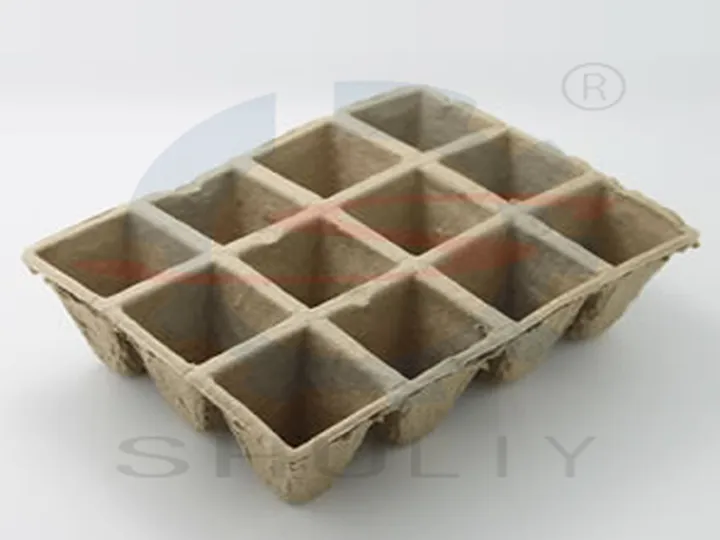
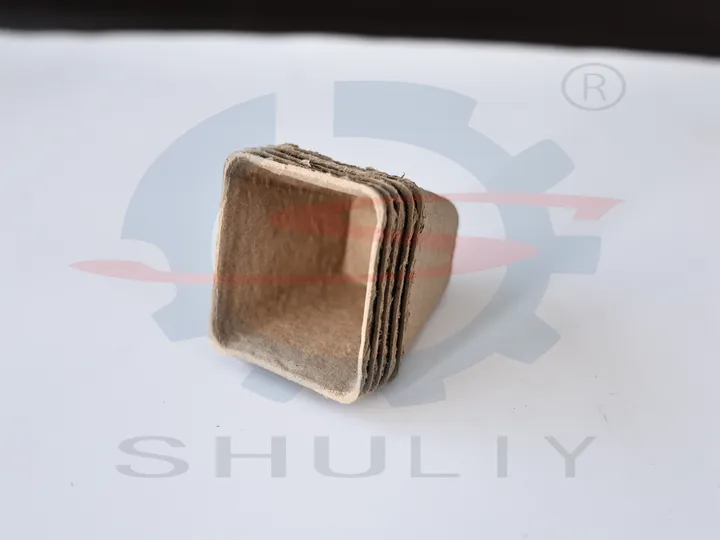
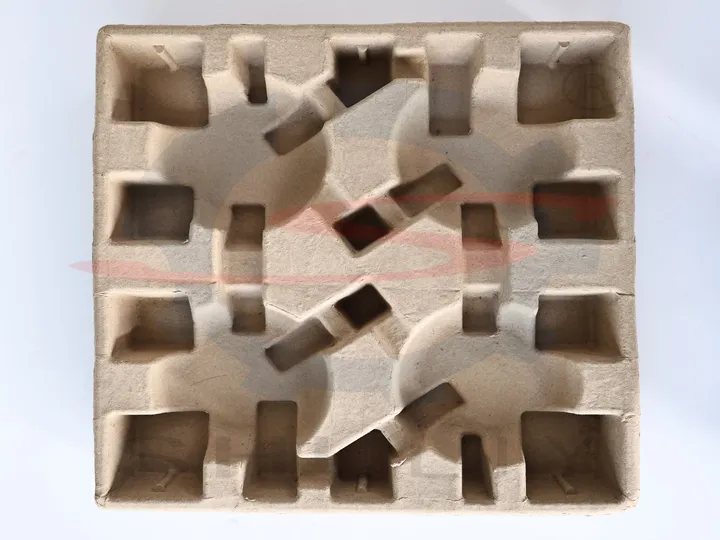
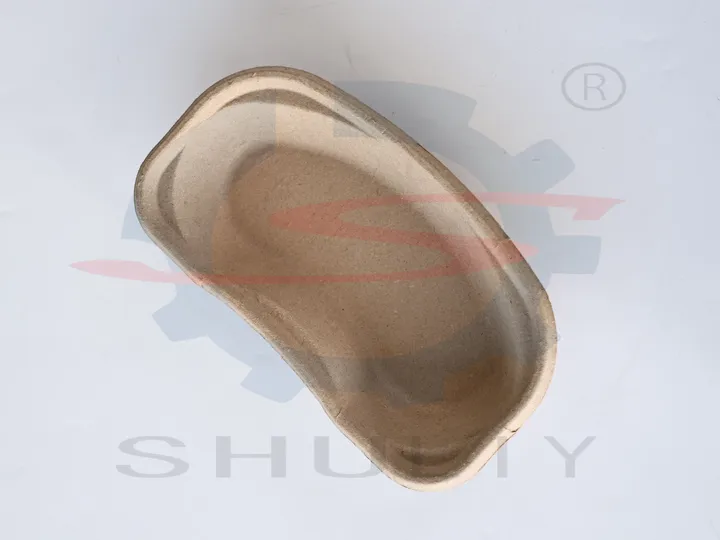
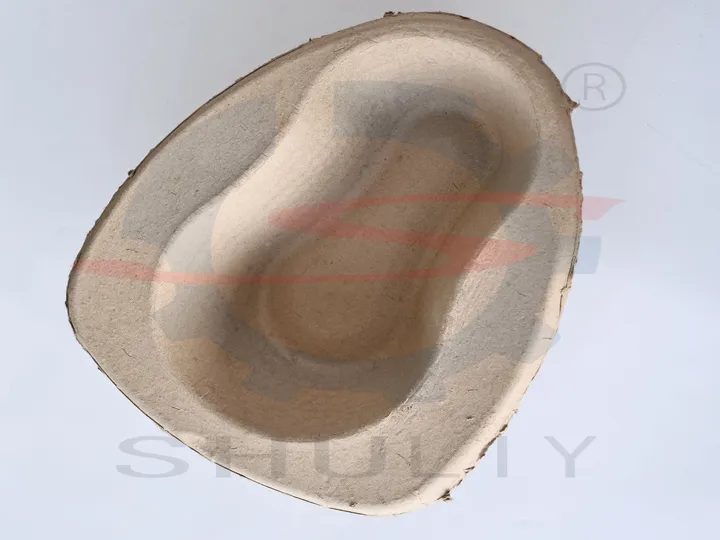
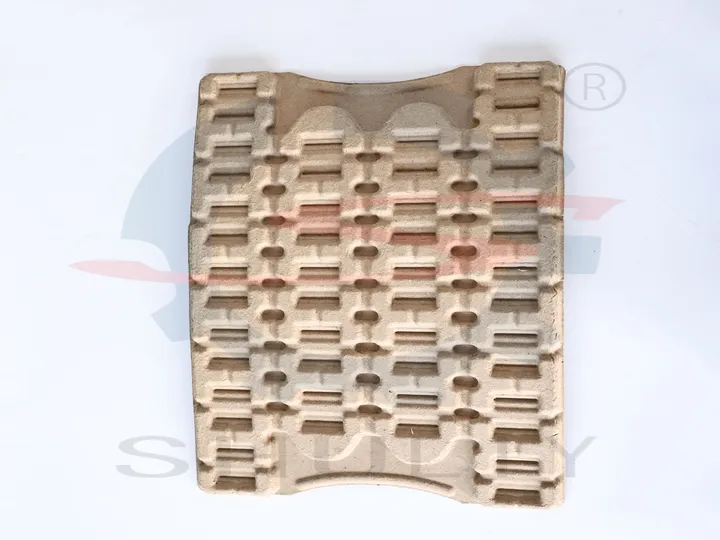
Raw materials are mainly straw pulp, slurry, bamboo pulp, wood pulp, waste paperboard, waste paper box paper, waste white paper, paper mill tail pulp waste, etc. The raw material has a wide range of source and is easy to collect. The egg tray machine is the main machine for the egg tray production line .
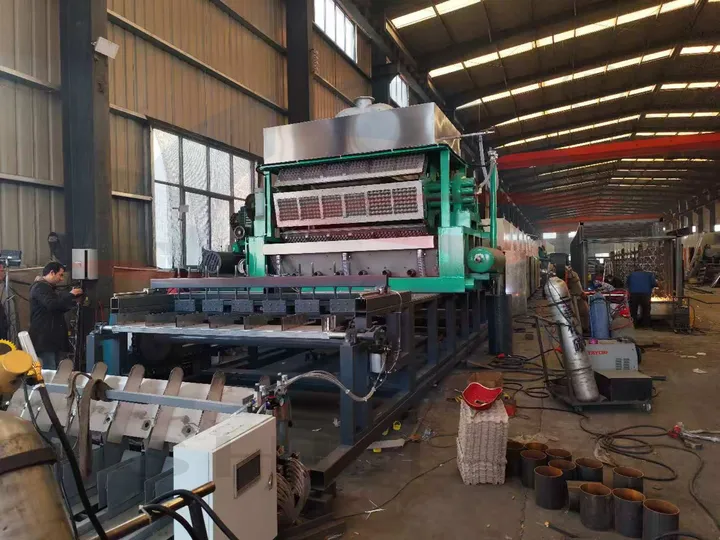
Feeding the pulp in the pulp pool into the molding machine. The pulp is absorbed by the vacuum system, and the pulp is molded by the mold on the equipment. The water is absorbing and transporting back into the pulp pool through the vacuum pump. The water can be recycled.
After the mold adsorbs the water slurry, the transfer mold is discharged through the air compressor. The finished product is blown from the forming mold onto the transfer mold, and then it is sent out by the transfer mold.
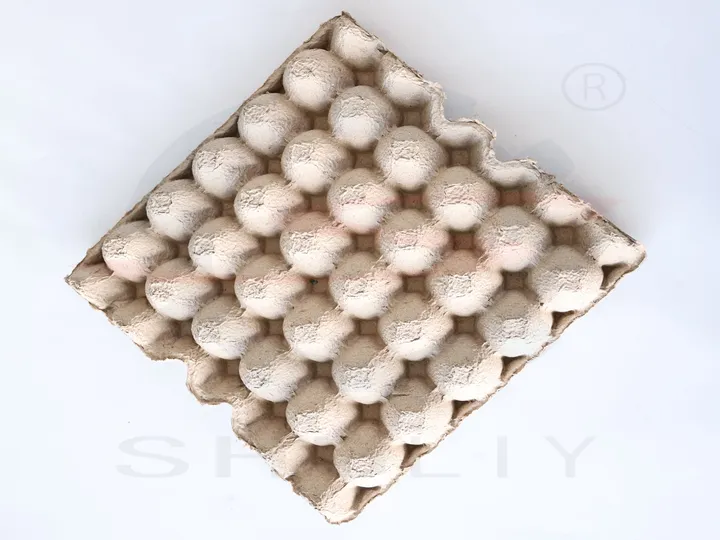
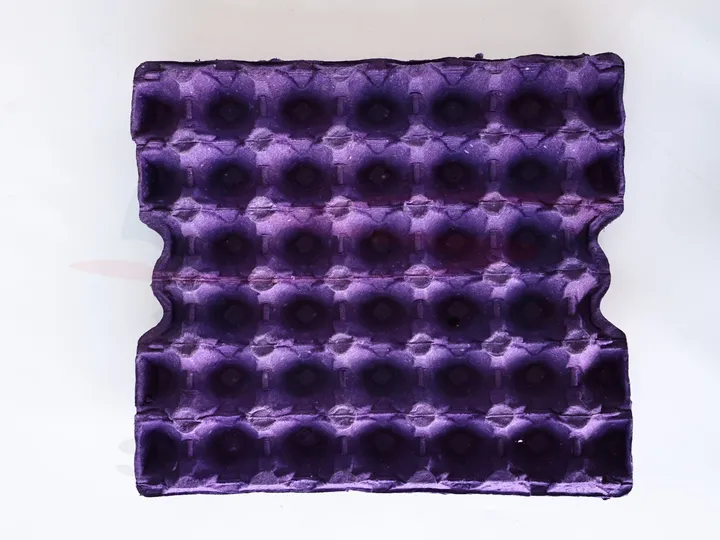
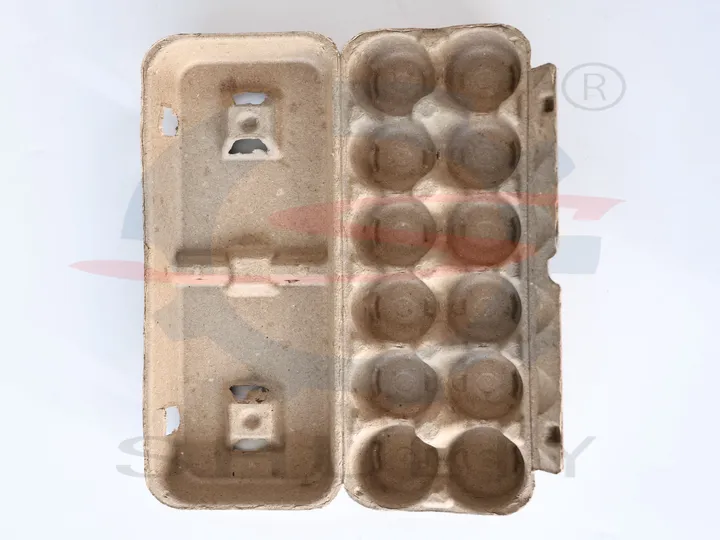
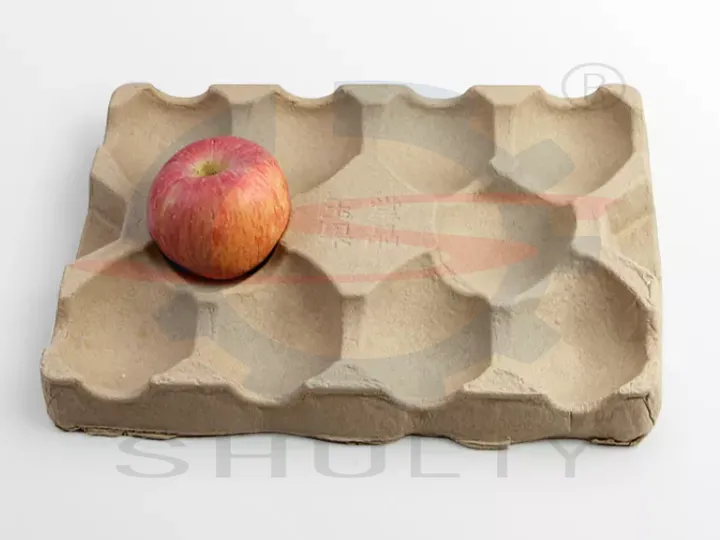
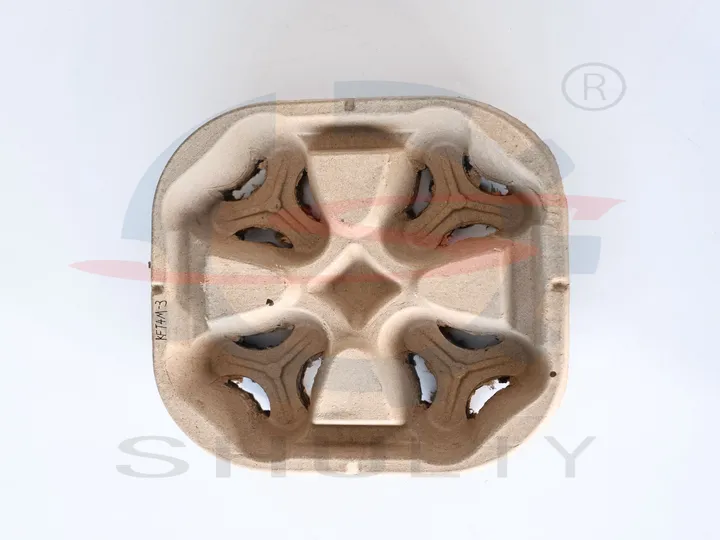
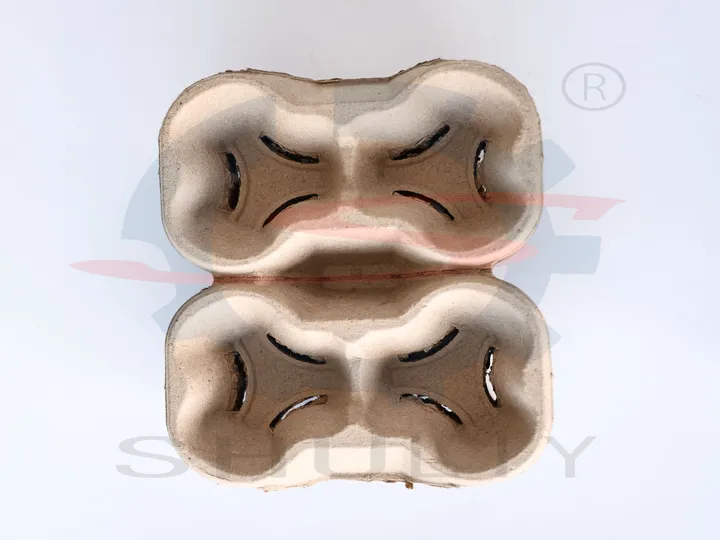
| Cost Item | Description | Unit Cost per Tray (RMB) |
| Raw Material | 1 ton of waste paper can produce 12,000–15,000 trays (based on tray weight). Based on 80g per tray: 1,000,000g ÷ 80g = 12,500 trays Waste paper price: ¥1500/ton → 1500 ÷ 12,500 = ¥0.12 per tray | ¥0.12 |
| Labor | Sun drying: 6 workers; drying by machine: 4 workers. In China, Labor is often calculated by piecework: approx. ¥0.02 per tray. | ¥0.02 |
| Electricity | Varies with capacity and power consumption. Higher output means lower cost per tray. | ¥0.02 |
| Drying Fuel | Coal (5000 kcal/kg) Wood (4000 kcal/kg) Natural Gas (8900 kcal/m³) Diesel (11,900 kcal/liter) | ¥0.03/pc ¥0.03/pc ¥0.06/pc ¥0.08/pc |
| Pigment (optional) | ¥12/kg pigment; 1 kg can produce approx. 3000–4000 trays | Approx. ¥0.003–0.004 |
Currency Conversion : $1(USD)=¥7.2(RMB)
Environmental friend: With the development of society, more and more people are paying attention to environmental protection issues. The environment is what people depend on for survival. So we have to protect the environment through various channels. Recycling of waste paper is a way to protect the environment. No pollution will occur during the production process.
Functions: The main function of the egg tray is shock absorption. Separate items, such as fragile items, to reduce the rate of breakage of items during transportation or storage.
Price: The egg tray machine has several models to choose from. If you want to start a business from small, this is a good choice. The investment is not high, and you can take back the investment when the machine starts to produce. Egg tray machine for sale at a reasonable price from Zhengzhou Shuliy Machinery.
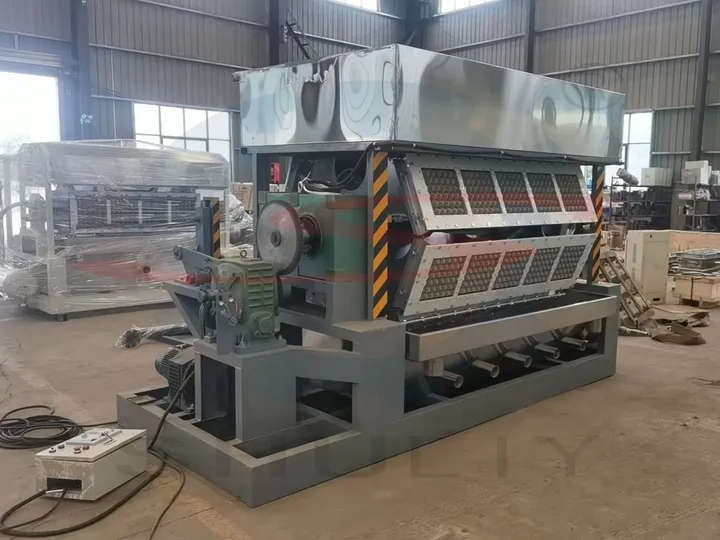


In August 2025, Shuliy completed the installation and commissioning of a 2,500 pcs/h egg tray production machine for a customer in Sierra Leone. The customer runs a food packaging business and wanted to turn locally collected waste paper into biodegradable egg trays.
Equipment supplied:
Project results:

Shuliy designs and builds every 8 side egg tray machine in its own factory. This direct control keeps quality consistent and removes middleman costs. Buyers deal with engineers who understand the machine from frame to control system.
An 8-side machine is rarely used alone. Shuliy matches the forming machine with the right pulper, dryer, and packing equipment based on your target output, workshop size, and local fuel availability. You receive a layout drawing before production starts.
The 8-sided rotary drum uses vacuum forming with synchronized mold rotation. This design reduces stop-start wear and raises output to 4,000–7,000 trays per hour. Mold replacement takes less than 30 minutes.
Shuliy has shipped and installed egg tray machines in Africa, the Middle East, South America, Australia, and Southeast Asia. Engineers provide online or on-site installation and train your operators.
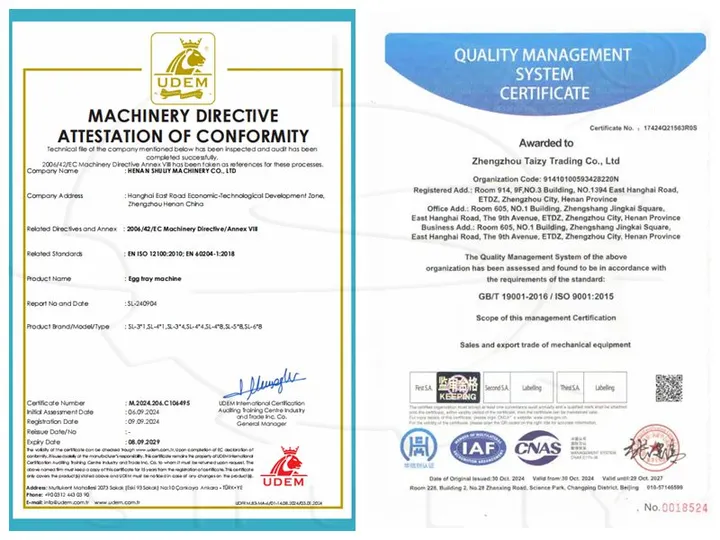
Machines meet CE and ISO standards. Electrical parts use internationally recognized brands, and motors meet standard efficiency ratings.
A 4-side machine has four forming faces on the rotary drum and is ideal for 2,000–3,000 pcs/h. An 8-side machine has eight forming faces and higher mold density, making it suitable for 4,000–7,000 pcs/h.
A complete 8-side line normally needs 3–5 workers per shift. One operator monitors the control panel, one handles raw material feeding, and the rest manage drying and packing.
Power use is approximately 0.0125–0.013 kWh per tray, or 12.5–13 kWh per 1,000 trays. Drying fuel is calculated separately based on coal, diesel, gas, or electricity choice.
Yes. By changing molds, the same machine can produce fruit trays, shoe trays, wine bottle trays, electronic component trays, and disposable food containers.
The forming machine itself needs about 30–50 m². With a brick kiln dryer, the total workshop area is usually 600–800 m². A multi-layer metal dryer reduces this to 200–300 m².
Standard models need 20–30 working days. Custom voltage or special mold designs may add 5–10 working days. Sea shipping time depends on the destination port.
We recommend keeping mold screens, vacuum pump seals, air compressor filters, bearings, and conveyor belts in stock. These parts wear gradually and are easy to replace.
Yes. The electrical cabinet is waterproof and dustproof. Stainless steel parts resist corrosion. In very humid areas, we recommend a metal dryer instead of natural sun drying.
By Capacity
Shuliy offers large egg carton machines in three models: SL-4*8, SL-5*8, and SL-6*8. Their capacity ranges from 4,000 to 7,000 pcs/hr.
By Capacity
Shuliy’s 2,000–3,000 PCs/hr egg tray making machine, also called a multi-face rotary drum machine, delivers high-efficiency pulp tray production for medium-capacity factories.
By Capacity
Shuliy’s SL-3*1 & SL-4*1 small egg tray machines mold 1,000–1,500 trays/hour from waste paper, ideal for small farms with low investment & easy operation.
By Capacity
The 12 side egg tray machine including two models. The first model can produce about 6000pcs per hour, the second model can produce about 8000pcs per hour. It is suitable for big scale factory production. Zhengzhou …
By Capacity
4 side egg tray machine, 2500–3000 pcs/h output. Rotary four-sided forming design delivers higher efficiency, stable quality, and continuous production.
By Capacity
The common model is 1 side egg tray machine, which is a small egg tray making machine. This article will introduce you about it.