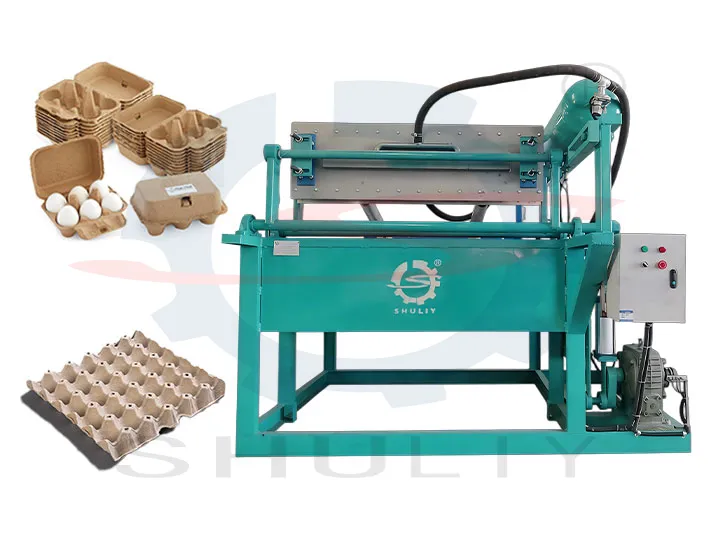
By Capacity
4000-7000pcs/hr Egg Carton Machine
Shuliy offers large egg carton machines in three models: SL-4*8, SL-5*8, and SL-6*8. Their capacity ranges from 4,000 to 7,000 pcs/hr.
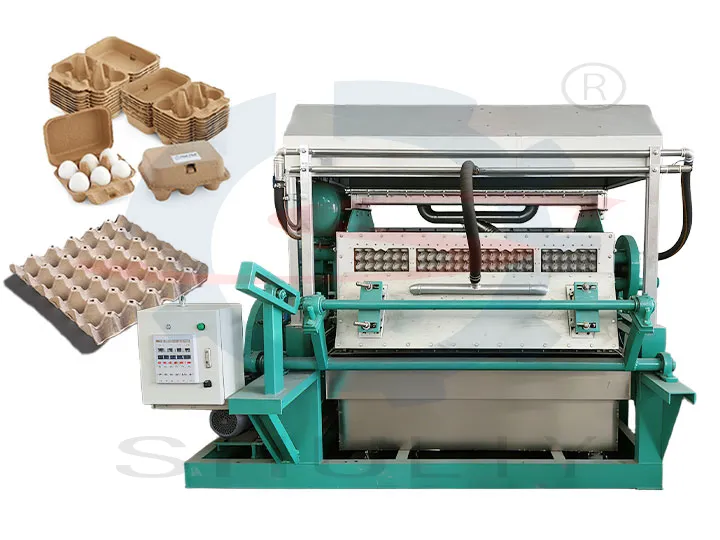
By Capacity
4 side egg tray machine, 2500–3000 pcs/h output. Rotary four-sided forming design delivers higher efficiency, stable quality, and continuous production.
A 4 side egg tray machine is an advanced rotary pulp molding machine engineered to produce egg trays through a four-sided forming mechanism. Unlike traditional single-face or reciprocating machines, this equipment features four forming molds mounted on a rotating drum, enabling simultaneous molding operations on all four sides of the drum. This innovative design dramatically increases production throughput while maintaining consistent product quality.
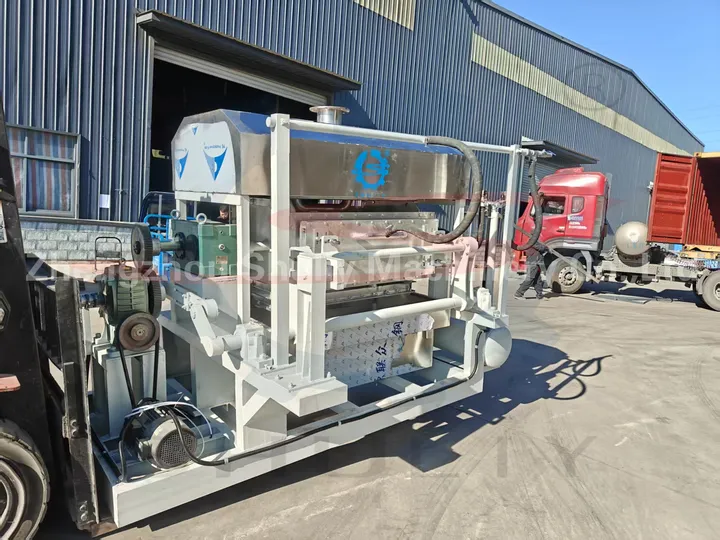
The machine is available in two primary models: the SL-2500-3X4 and the SL-3000-4X4. The SL-2500-3X4 delivers an output of approximately 2,500 pieces per hour, while the larger SL-3000-4X4 achieves 3,000 pieces per hour or more. Both models process recycled paper pulp into high-quality egg trays suitable for poultry farms, egg packaging facilities, and agricultural distribution centers.
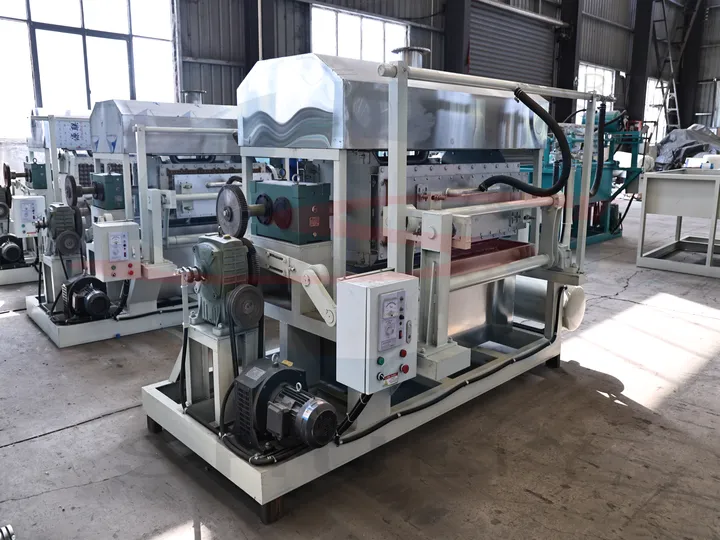
Compared with conventional single-sided or reciprocating egg tray machines, the four-sided egg tray making machine offers significantly higher production efficiency, reduced cycle times, and more uniform product formation. The continuous rotary motion eliminates the stop-start delays inherent in reciprocating designs, making it the preferred choice for commercial-scale operations seeking maximum output with minimal labor intervention.
| Parameter | SL-2500-3X4 | SL-3000-4X4 |
|---|---|---|
| Production Capacity | 2,500 pcs/h | 3,000+ pcs/h |
| Forming Mechanism | 4-Side Rotary (3 Molds/Side) | 4-Side Rotary (4 Molds/Side) |
| Total Mold Count | 12 | 16 |
| Mold Configuration | 3 × 4 | 4 × 4 |
| Forming Type | Rotary Drum Vacuum Forming | Rotary Drum Vacuum Forming |
| Applicable Tray Types | 30-Cell Egg Trays | 30-Cell Egg Trays |
| Raw Materials | Waste Paper, Cardboard, Pulp Board | Waste Paper, Cardboard, Pulp Board |
| Pulp Concentration | 3–5% | 3–5% |
| Operating Voltage | 380V / 50Hz (Customizable) | 380V / 50Hz (Customizable) |
| Automation Level | Fully Automatic PLC Control | Fully Automatic PLC Control |
| Labor Requirement | 2–3 Operators/Shift | 2–3 Operators/Shift |
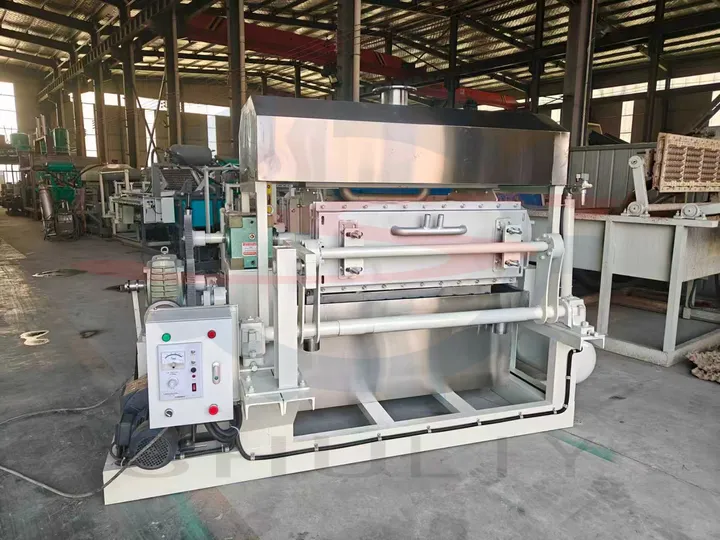
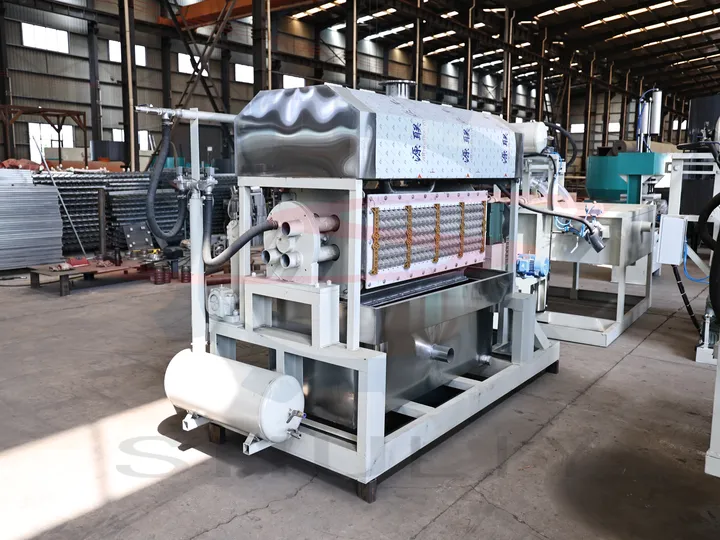
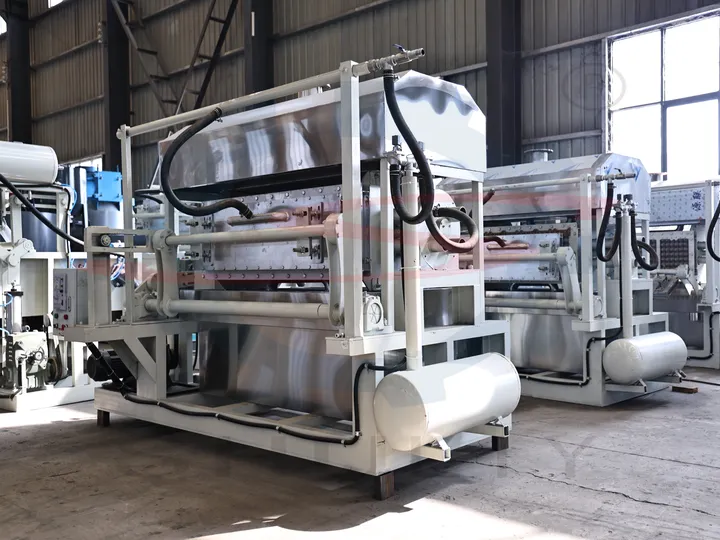
The defining characteristic of the 4 side rotary egg tray machine is its four-sided drum configuration. Each side of the rotating drum carries multiple forming molds (3 molds per side on the SL-2500-3X4, and 4 molds per side on the SL-3000-4X4). As the drum rotates continuously, each mold passes through the pulp vat, vacuum forming station, and product ejection zone in a seamless cycle. This design ensures that forming, dewatering, and transfer operations occur simultaneously on different sides of the drum, maximizing time efficiency.
The SL-2500-3X4 features a 3 × 4 mold arrangement (3 molds on each of 4 sides, totaling 12 molds), while the SL-3000-4X4 employs a 4 × 4 mold arrangement (4 molds on each of 4 sides, totaling 16 molds). This high-density configuration enables the machine to produce 2,500 to 3,000+ trays per hour, representing a 60-80% output increase compared to single-face machines of similar footprint.
Unlike reciprocating machines that must stop, form, and return for each cycle, the rotary egg tray molding machine operates with continuous drum rotation. This eliminates idle time between cycles and reduces mechanical stress on drive components. The smooth rotary motion also contributes to more uniform pulp distribution within each mold cavity, resulting in consistent wall thickness and structural integrity across all produced trays.
Each mold is equipped with an independent vacuum system that precisely controls pulp deposition and water removal. The vacuum pressure is optimized for the four-sided configuration, ensuring that all molds achieve identical forming quality regardless of their position on the drum. This uniform vacuum distribution is critical for maintaining product consistency at high production speeds.
After forming, the wet trays are automatically transferred from the molds to a delivery conveyor. The transfer mechanism is synchronized with the drum rotation, ensuring gentle handling that prevents deformation. An optional automatic stacking system can be integrated to arrange trays in neat stacks, further reducing labor requirements and preparing products for direct transfer to the drying section.
Both models support rapid mold replacement, allowing operators to switch between different tray specifications (such as 30-cell egg trays, 20-cell egg cartons, or custom fruit trays) within 30-45 minutes. This flexibility enables facilities to respond quickly to changing market demands without investing in separate machines for each product type.
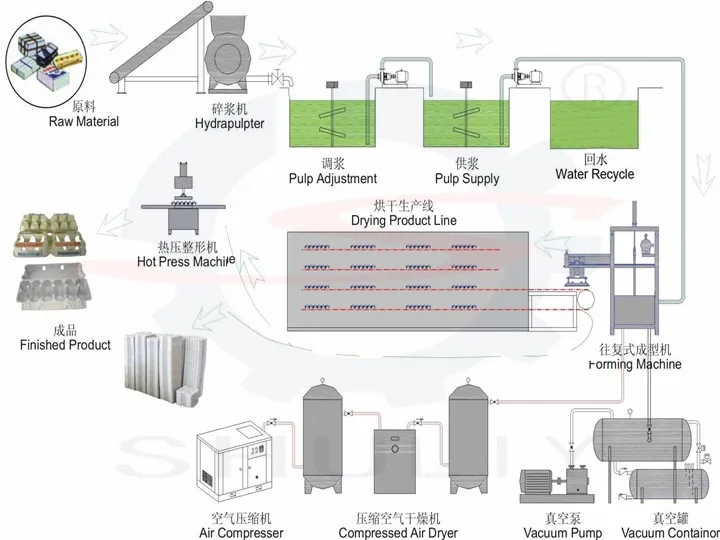
The production process follows a continuous rotary workflow:
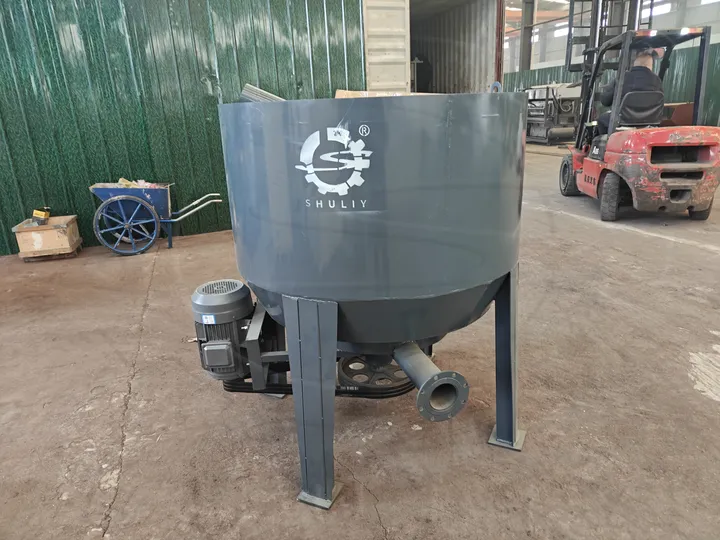
Waste paper or pulp board is mixed with water in the hydropulper to create a 3-5% consistency pulp slurry. The pulp is then pumped to the machine’s forming section.
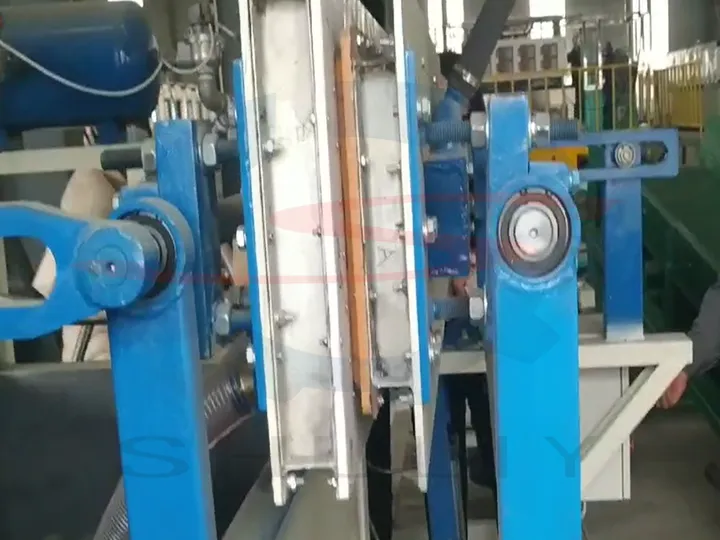
As the four-sided drum rotates, each mold is sequentially immersed in the pulp vat. Vacuum suction draws the pulp fibers onto the mold screen, forming the tray shape while excess water drains away.
After emerging from the pulp vat, the formed tray undergoes a brief air-dewatering phase as the drum continues to rotate. This reduces moisture content before transfer.
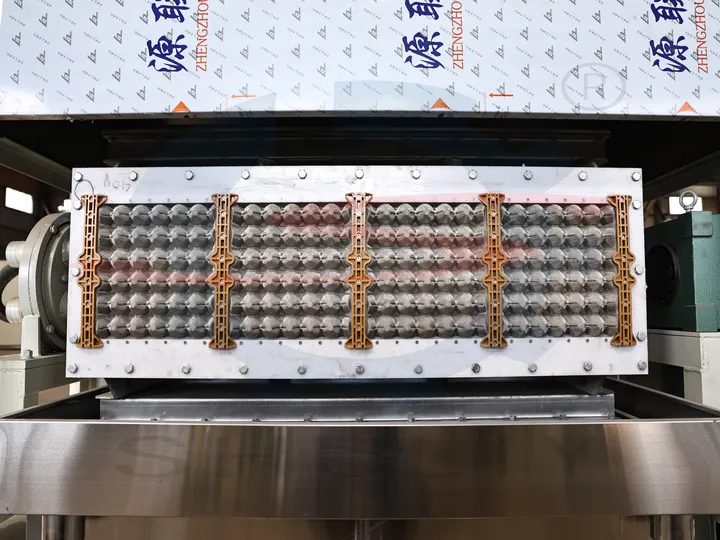
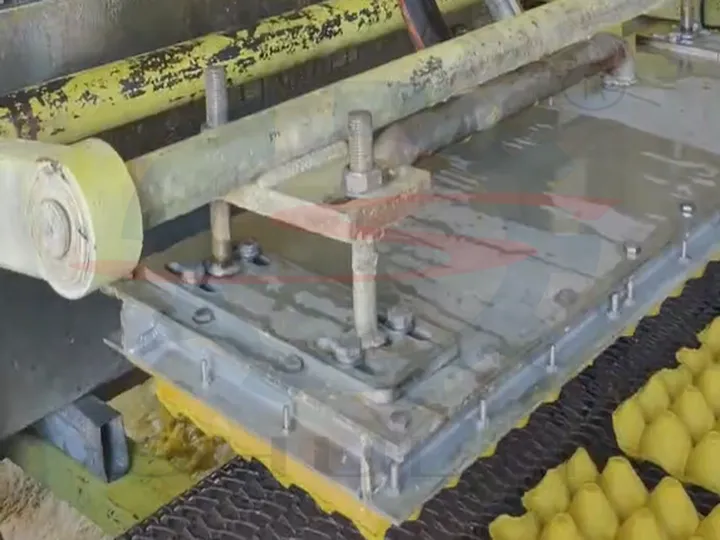
At the designated ejection position, the vacuum is released and positive air pressure pushes the formed tray off the mold onto the transfer conveyor. The empty mold then continues to the next forming cycle.
The wet trays are conveyed to a collection point or directly to an integrated drying system (such as a mesh belt dryer or drying room) for final moisture reduction.
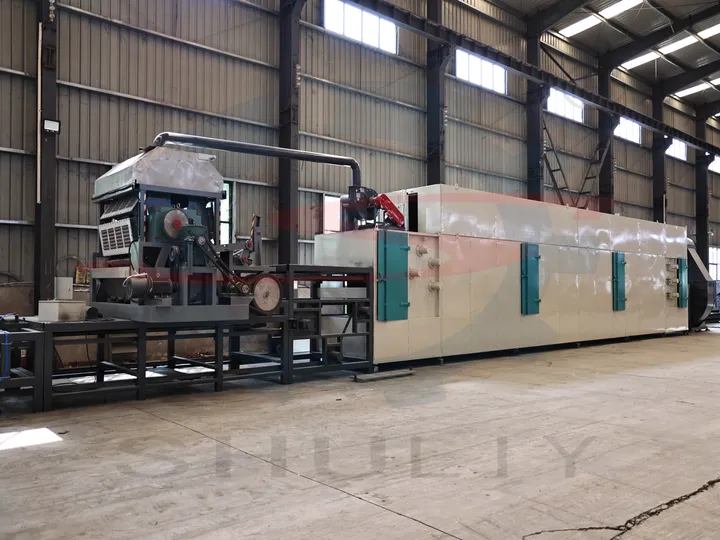
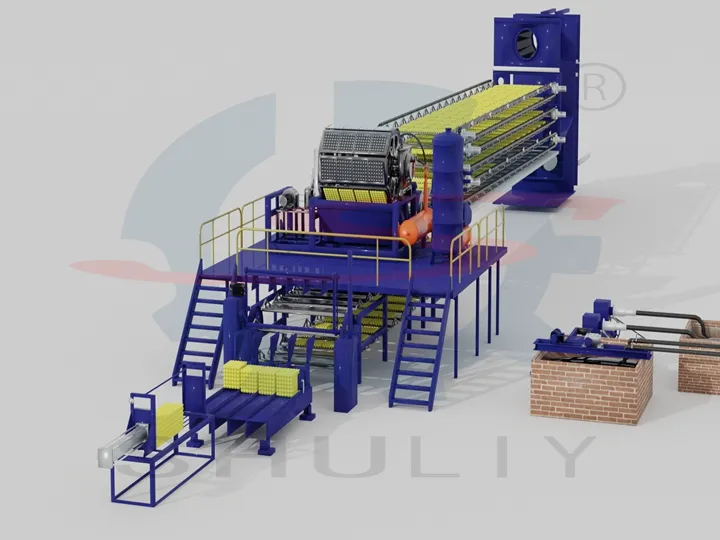
Shuliy offers semi-automatic or fully automatic egg tray production lines featuring the 4-sided egg tray machine, which can be configured according to your requirements.
| Common Problem | Shuliy Solution |
|---|---|
| Low production capacity limits business growth | Four-sided rotary design with 12–16 molds produces 2,500– 3,000+ trays/hour, 60–80% more than single-face machines |
| Inconsistent tray quality causes rejection rates | Uniform vacuum distribution across all mold positions ensures identical forming quality on every side of the drum |
| High labor costs reduce profit margins | Fully automatic operation with PLC control requires only 2–3 operators per shift |
| Frequent mold changes disrupt production schedules | Quick-change mold system enables product switching in 30– 45 minutes |
| Machine downtime hurts delivery commitments | Continuous rotary motion eliminates stop-start cycles, reducing mechanical wear and maintenance requirements |
| Limited product variety restricts market opportunities | Compatible with egg trays, egg cartons, fruit trays, and custom pulp molds through mold replacement |
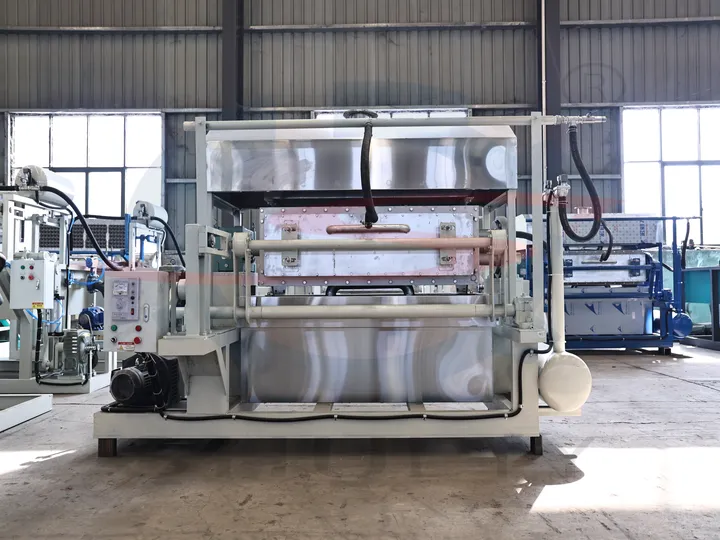
The SL-2500-3X4 is engineered for facilities producing approximately 20,000 to 25,000 egg trays per day (assuming 10-hour shifts). With its 3 × 4 mold configuration and 2,500 pieces per hour capacity, this model offers an optimal balance between investment cost and production output. It is particularly suitable for:
The SL-3000-4X4 represents the higher-capacity option, delivering 3,000+ trays per hour through its 4 × 4 mold arrangement. This model is designed for facilities requiring 30,000+ trays per day and is ideal for:
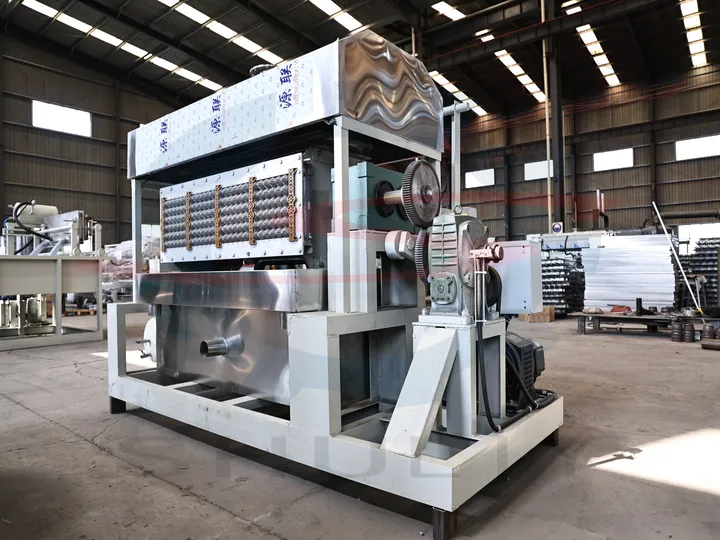
Shuliy has refined the four-sided rotary forming mechanism through years of field testing and customer feedback. The drum geometry, vacuum system calibration, and mold interface design have been optimized specifically for egg tray production, resulting in industry-leading forming consistency and minimal product defects.
The 4 side egg tray making machine can be seamlessly integrated with Shuliy’s complete pulp molding production lines, including:
A 4 side machine features four forming surfaces on the rotary drum, while an 8 side machine doubles this to eight surfaces. The 4 side configuration offers a balanced combination of production speed and mechanical simplicity, making it more cost-effective for operations producing 20,000-30,000 trays daily. An 8 side machine targets ultra-high-volume facilities exceeding 50,000 trays per day but requires significantly higher capital investment and more complex maintenance.
Approximately 120–150 kg of dry waste paper is required to produce 1,000 standard 30-cell egg trays. Consumption varies depending on tray thickness, pulp consistency, and the efficiency of the pulp preparation system.
For a typical operation selling egg trays at $0.08–0.12 per piece, the payback period is generally between 8 and 14 months. Actual returns depend on factors such as labor costs, raw material prices, and market demand.
Under normal operating conditions, forming molds typically last 6–12 months. Service life depends on production volume, pulp quality, and maintenance practices. Clean pulp and proper lubrication help extend mold lifespan.
We recommend maintaining an inventory of forming mold screens, vacuum pump seals, drive belts, bearings, and pneumatic components. These items experience the most wear during normal operation. Our technical team will provide a detailed spare parts list customized to your specific model and production schedule.
The machine is engineered for industrial environments with ambient temperatures up to 45°C and relative humidity up to 85%. For extreme conditions, we offer optional climate protection packages including enhanced ventilation, moisture-resistant electrical enclosures, and tropical-grade paint finishes.
Standard models (SL-2500-3X4 and SL-3000-4X4) typically ship within 25-35 days from order confirmation. Custom configurations or specialized mold designs may extend lead time to 45-60 days. We provide detailed production schedules and shipping updates throughout the manufacturing process.
By Capacity
Shuliy offers large egg carton machines in three models: SL-4*8, SL-5*8, and SL-6*8. Their capacity ranges from 4,000 to 7,000 pcs/hr.
By Capacity
Shuliy’s 2,000–3,000 PCs/hr egg tray making machine, also called a multi-face rotary drum machine, delivers high-efficiency pulp tray production for medium-capacity factories.
By Capacity
Shuliy’s SL-3*1 & SL-4*1 small egg tray machines mold 1,000–1,500 trays/hour from waste paper, ideal for small farms with low investment & easy operation.
By Capacity
The 12 side egg tray machine including two models. The first model can produce about 6000pcs per hour, the second model can produce about 8000pcs per hour. It is suitable for big scale factory production. Zhengzhou …
By Capacity
The 8 side egg tray machine, also known as a large-scale egg tray forming machine, is equipped with an 8-sided rotary drum
By Capacity
The common model is 1 side egg tray machine, which is a small egg tray making machine. This article will introduce you about it.